Unmoderated usability testing: hear why people drop out of your flow and see how many of them do
The Targeted Flow Analysis is an unmoderated usability test by research agency WUA: no researcher watches along. People from your audience do a task in one flow on your site or in your app at home, such as a calculator, a comparison tool or an application form. They think aloud while they do it. 10 to 50 people take part on your site. Want to include competitors? Then the same goes for their sites. You get scores per task, an advisory report and a presentation.
Book an introduction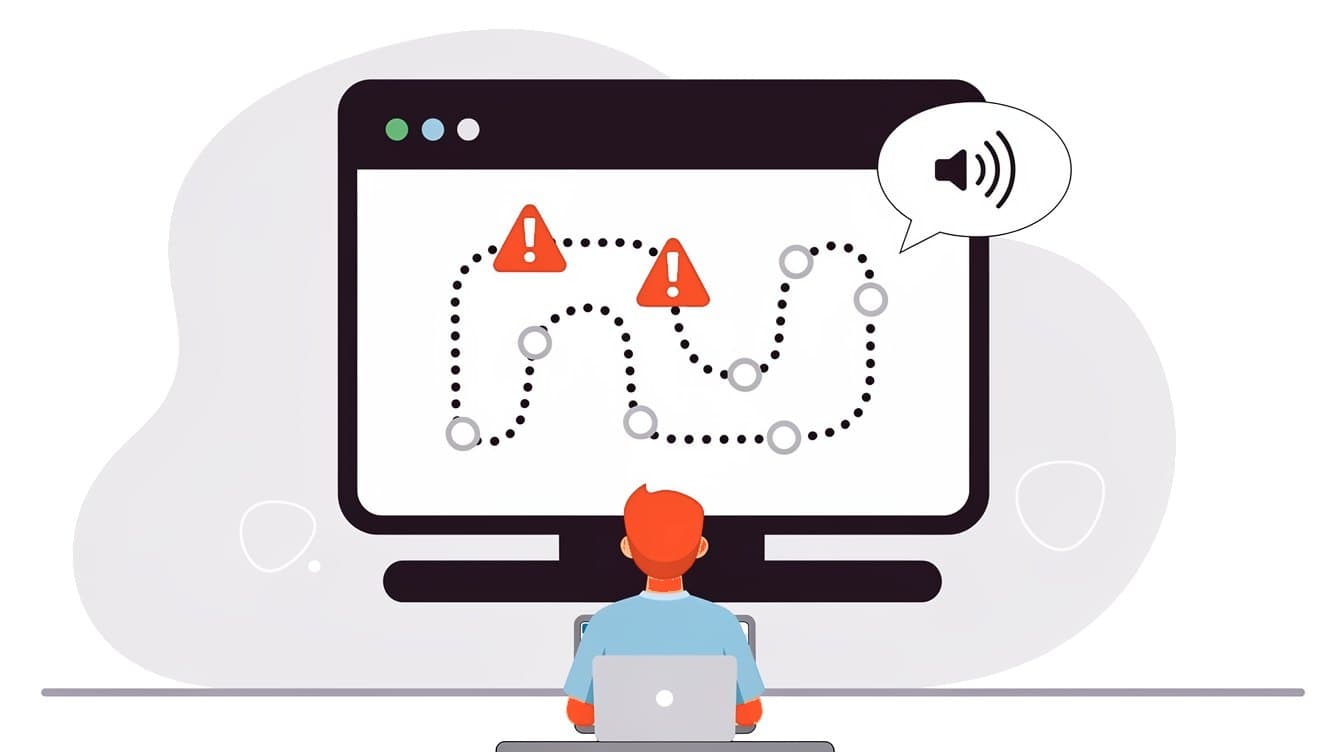
How a Targeted Flow Analysis works
Your web analytics show where people drop out, but not why. In the Targeted Flow Analysis you hear the why. And you see how many participants it affects.
Choose a flow
Your calculator, comparison tool or application form, for example. Or a task after logging in.
Tasks and participants
We recruit people from your audience. We test competitors too if you want.
Doing the task at home
On their own phone or computer. They think aloud and we record their voice. In groups of up to 20 people per site, their screen as well.
Analysis
Click paths, scores per task and what people said out loud.
Report and presentation
With concrete improvements.
How the Targeted Flow Analysis measures your flow
- People from your audience do the same task in your flow at home. Each line is one person.
- You see at which step people go back or stop and how many of them do.
- They think aloud. So you hear why they hesitate.
- In orange, your biggest bottleneck: where it goes wrong, for how many people and why.
- “What do they mean by this?”
- “I can't see what it costs anywhere.”
- “Do I have to fill this in now?”
Where do people drop out of your flow?
Book an introductionWhat the Targeted Flow Analysis gives you
After the analysis you know which step to improve first and how many people it affects.
Click paths per step
For each step you see what share of participants go back or stop. So you know how big a problem is. For this we record their screen, in groups of up to 20 people per site.
Your flow
Step 1
Step 2biggest bottleneck
carries ongoes back or stops
Step 3
Step 4
The why, in their own words
Because participants think aloud, you hear why they hesitate or stop. Even when more than 20 people per site take part and we only record their voice.
What people said at step 2
- “What do they mean by this? Let me go back.”
- “I can't see what it costs anywhere.”
Scores on behaviour and experience
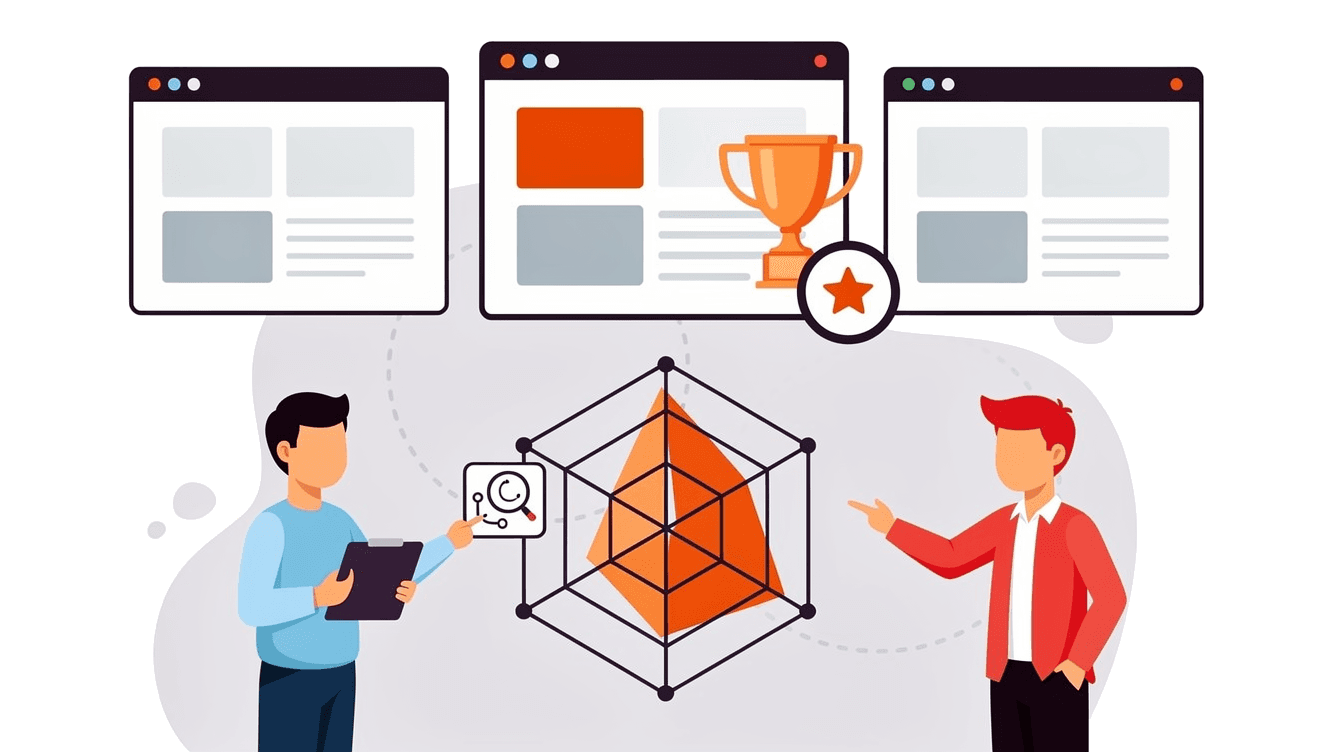
For each task, scores show how people get on and how they experience it. If you test a competitor too, their scores sit alongside yours.
Your flow
- You
- Competitor
Behaviour
Experience
An advisory report and a presentation
In the advisory report WUA puts the improvements in order of priority, with examples of how to do better. In a presentation WUA discusses the results with you and your team.
Advisory report
- Add an explanation at step 2
- Show the price earlier
- Put the options side by side
Presentation with your team
Start with a no-obligation conversation
- Investment
- from €5,000 per study, with report
- Participants
- 10 to 50 per site
- IntroductionWe discuss your question.
- ProposalPrice and planning tailored to you.
- We do the restRecruitment, research and analysis.
 You'll speak with Merel Schouten, research consultant
Is a Targeted Flow Analysis right for you?
- You know where people drop out, but not why.
- You want to know how many people are affected by a problem.
- You want to test an improvement before or after it goes live.
Targeted Flow Analysis or Lab45 Usability?
See how often it happens and hear why
Targeted Flow Analysis
More people do the task at home, with no researcher present. You see how big a problem is.
Ask why people get stuck
Lab45 Usability
One on one, with a researcher who asks why. A small group is enough to find the problems.
| Study | Method | Number of people | Competitors | Outcome |
|---|---|---|---|---|
| Website Experience Deep Dive | Your target audience rates | 200 | 3 | Scores, advisory report and workshop |
| Digital Service Scan | Customers do service tasks in their own account | 200 | 3 | Scores per task, advisory report and workshop |
| Website Audit | Expert review with AI analysis | No customer test | 2 | One list of priorities and a presentation |
| Website Experience Snapshot | Deep Dive on 3 parts | 150 | Up to 2 | Scores, advice and presentation |
| Digital Market Tracker | Consumers search the whole market | 400 per quarter | Whole market | Dashboard, every quarter |
| Targeted Flow Analysis | One flow, thinking aloud, no researcher | 10 to 50 per site | Your choice | Click paths, scores, advisory report and presentation |
| Lab45 Usability | One to one, thinking aloud | 6 as standard | No benchmark | Recordings and findings |
| Mystery shopping | Test customer checks criteria | - | - | Findings per criterion |
Frequently asked questions about unmoderated usability testing
How do you find out why customers drop out of a flow, such as a calculator or application form?
Your web analytics show at which step people leave, but not what they do or think there. In a Targeted Flow Analysis people from your audience do exactly that task at home and think aloud. So you see where they go back or stop and you hear why.
What is unmoderated usability testing?
A test of your site or app without a researcher present. Participants do the tasks at home in their own time and say out loud what they think, while it is recorded. Because nobody has to sit next to them, more people can take part than in a user test with a researcher.
What does unmoderated usability testing cost?
At WUA a Targeted Flow Analysis costs from €5,000. The price depends on the number of sites, tasks, devices and participants. The advisory report and the presentation are included.
How many participants do you need?
At WUA 10 to 50 people per site take part. In groups of up to 20 people per site we record screen and voice. Then you also see their click paths. With more people we only record their voice: you still hear why they hesitate.
What is the difference between moderated and unmoderated usability testing?
Moderated means a researcher is present, as in Lab45 Usability. They ask follow-up questions as soon as a participant hesitates. A small group is then enough to find the problems. Without a researcher more people take part and you see how often a problem occurs. You hear the why in what they say out loud.
How is this different from session recordings in Hotjar or Clarity?
Hotjar and Clarity show what anonymous visitors do on your own site. You do not know what they wanted and you cannot hear them. In a Targeted Flow Analysis people from your audience get a set task and say out loud what they think. That works on a competitor's site too.
When do you choose an A/B test and when unmoderated usability testing?
An A/B test shows which of two versions works better, but not why. It also needs enough visitors. A Targeted Flow Analysis finds the cause first, so you know what to test. After a change it shows whether the problem has gone.
Why a research agency and not a testing platform yourself?
With a platform such as UserTesting or Maze you do everything yourself: finding participants, writing tasks, watching recordings and drawing conclusions. WUA does that for you and advises on the basis of 18 years of website research. You get an advisory report with concrete improvements.
Can you test the same flow at competitors?
Yes. You choose how many sites take part. On each site participants do the same task, so you see where it goes wrong for you and not for a competitor. If you want to compare your whole site with competitors, the Website Experience Deep Dive is a better fit.
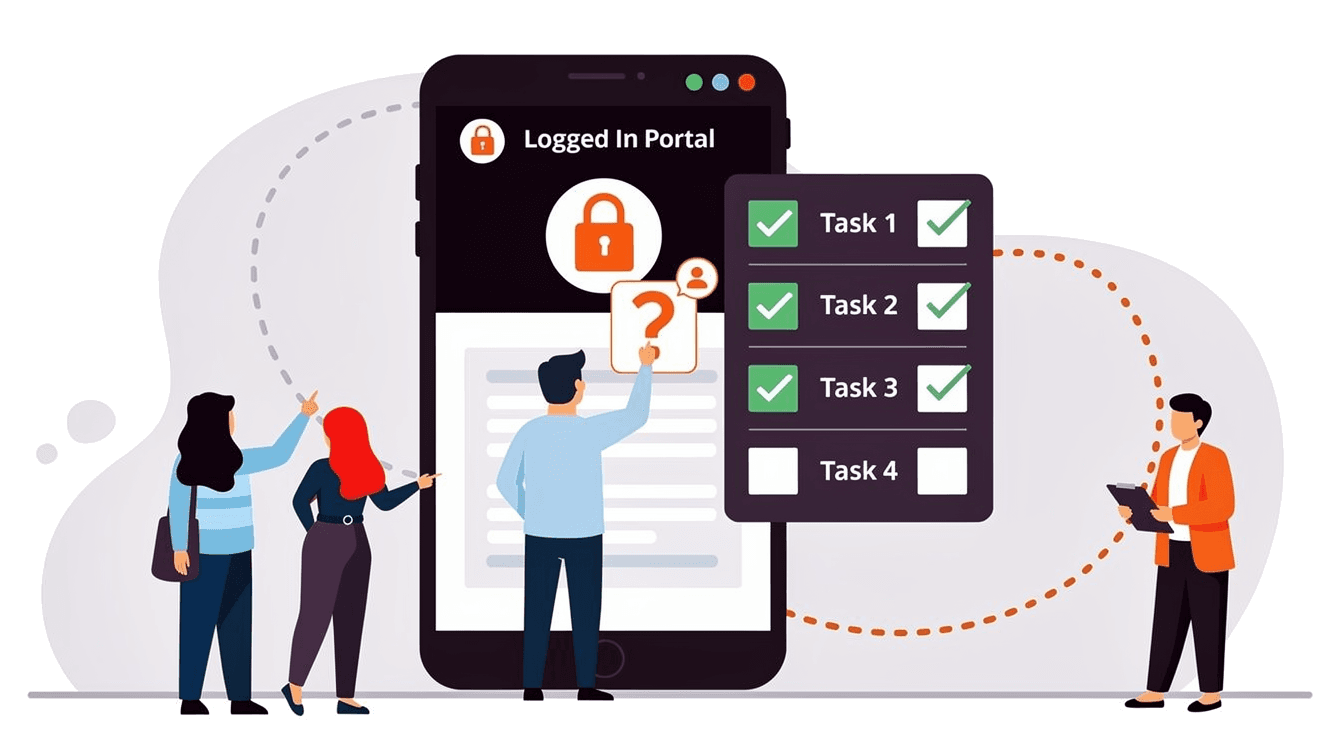
Can you also test a task after logging in?
Yes, for example changing an address or a subscription. The participants are then customers with an account. Whether we may record their screen depends on the security of your environment. We check that in advance.
Does it work for an app or on a phone?
Yes. Participants do the task on their own phone or computer, on your website or in your app. You choose which devices to test on.
Is the outcome representative of all your customers?
Not for all your customers. That is not the aim either: with 10 to 50 people per site you see whether a problem affects one or two people or a large part of the group.

Know why people drop out and which step to improve first
In an introductory call we discuss which process you want to test and what the task could look like.
Book an introduction