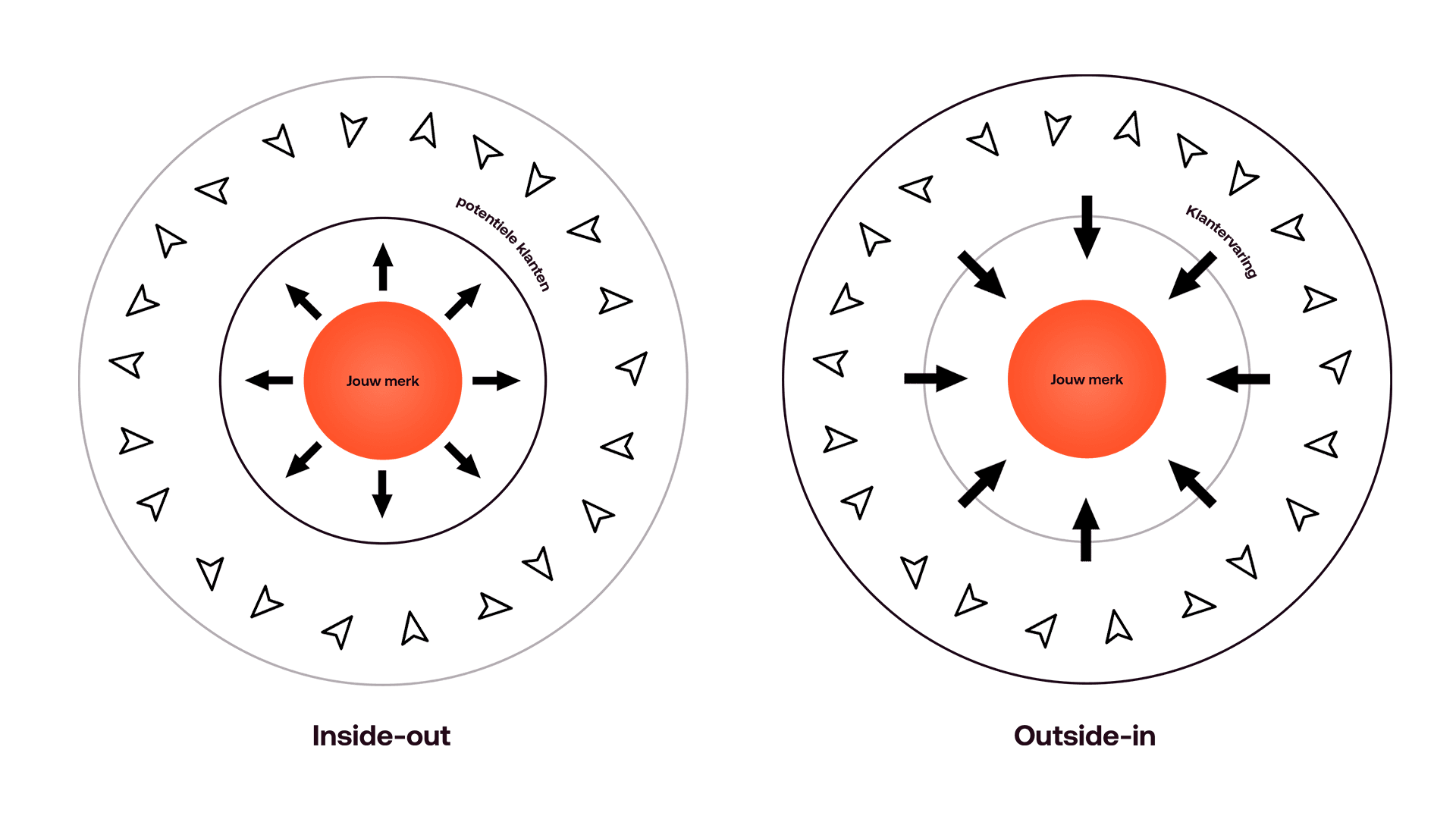
Putting the customer first has been the mantra for online marketers for years. By truly getting to know and understand your target audience, you can optimize your marketing perfectly. However, the interaction with your brand is only part of your target audience's world of experience. Your competitors are working just as hard. So how do you make your website the absolute best for your customers? With the advent of the internet came a new type of consumer: one who proactively searches for information, compares options, and shops online. To serve this modern consumer optimally, you as a brand offer a good customer experience across all channels, proving that you understand your customer and that they've come to the right place. That's why most companies have replaced the inside-out approach with an outside-in approach. Instead of reacting from within the organization (inside) to the market (out), it's now the other way around. The customer's needs come first, and you try to meet them in every way possible. In a competitive playing field, this leads to better results – but only to a certain extent. 
Putting the customer first isn't enough
As an online marketer, you deliver tight reports with rising charts and green checkmarks. Visitor numbers rise month after month, along with time-spent-on-site and page views of your product pages. But conversion is declining, and more and more consumers ultimately don't buy from you. You don't really understand how this happens. How can there be no revenue growth? Your online marketing seems optimally aligned with your target audience. You look at click behavior on the website, regularly conduct surveys, hold focus groups, use feedback forms, and have conversations with your diehard fans and promoters. You know exactly who your visitors are and what they want. All of this has certainly helped you get to where you are now, but it's no longer enough if you want to be the absolute best in your market. Also check out the online masterclass in collaboration with bol.com: How to optimize your online customer journey by looking outward
Your competitors are just as important to your customer
Consumers are spending more and more time on their smartphones and various digital channels, according to the Digital 2023 Overview Report by We Are Social and Meltwater. This makes it easier for brands to reach consumers one-on-one, but there's also much more noise. The challenge is to break through that noise and build a personal relationship with the consumer. But that's just the beginning. Even satisfied customers keep looking for better service or cheaper products. To understand why your customer ultimately chooses you or not, you'll also need to look at your competitors. Often, people still think you should ignore your competition: it leads to copycat behavior and is deadly for your innovation. But ultimately, it's not about what customers think of you or the competition.
It's about what customers think of your brand compared to the competition. That perspective is called outside-out.
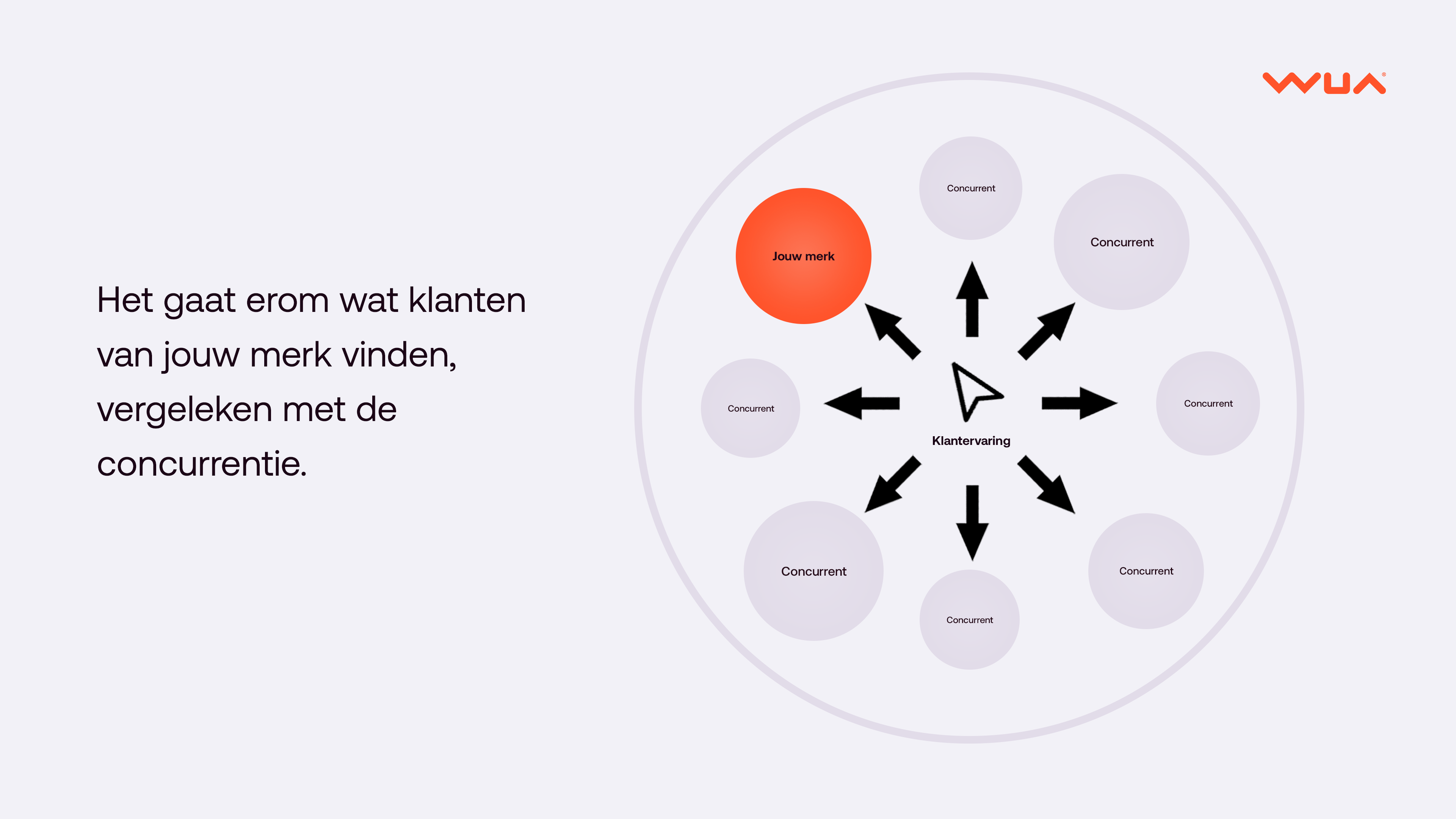
Looking outside-out: compare your results with your direct competitors
Outside-out is about looking at what customers, based on their needs, experience on competitors' websites and how that relates to their experience on your website. This keeps the focus sharp on customer experience, which is particularly useful when results are disappointing. Online marketers then tend to compare mainly with previous results from the distant or recent past. But when you can't find a direct cause in your offering or customer relationship, you'll have to look outside. How has your offering changed compared to others? Is a competitor running a promotional campaign with significant discounts? Better and more complete product descriptions? Quick filter options? Or a new handy tool that helps customers find the right product directly? These are typical outside-out matters that can have a big impact on your results. In a market with continuous competition, every battle for the customer counts, especially when they have high expectations. This creates high pressure to keep performing and increase the conversion rate. In this battle, a conversion rate of 3% is seen as a good score. But what if you turn that around?
Go for the remaining 97%
Most online marketers only look at the conversion they achieve themselves and then optimize it further. While potential customers also explore competitors' websites. With an average conversion of 3%, 97% is ignored, and that's where the real growth potential lies. Why doesn't that 97% buy from you? What percentage ultimately buys from your competitor, and why? Answer these questions and you'll know how to turn this group into customers too. While conversions are the desired result of a good customer experience, they're not the most important thing for brands. A conversion rate only indicates transactions relative to traffic. It doesn't give you insight into customer satisfaction or how the customer navigated through the customer journey. Every brand's goal should be to create digital experiences that ensure customers leave your app, site, or webshop happier than when they arrived. This way, customers also feel less need to look at the competition. As a brand, you'll need to find a way to measure customer experience relative to the competition. Only then can you positively differentiate yourself in the market as a leader. Also see: Free masterclass with bol.com: How to optimize your online customer journey by looking outward
There can only be one winner
The best method to compare the digital experience of different brands is benchmarking. WUA benchmark data shows that the absolute best website is chosen 44% more often on average than number two. This also means a market share that's 44% larger on average. The difference between number two and number three is equally large. And whoever falls outside the top three is left behind. 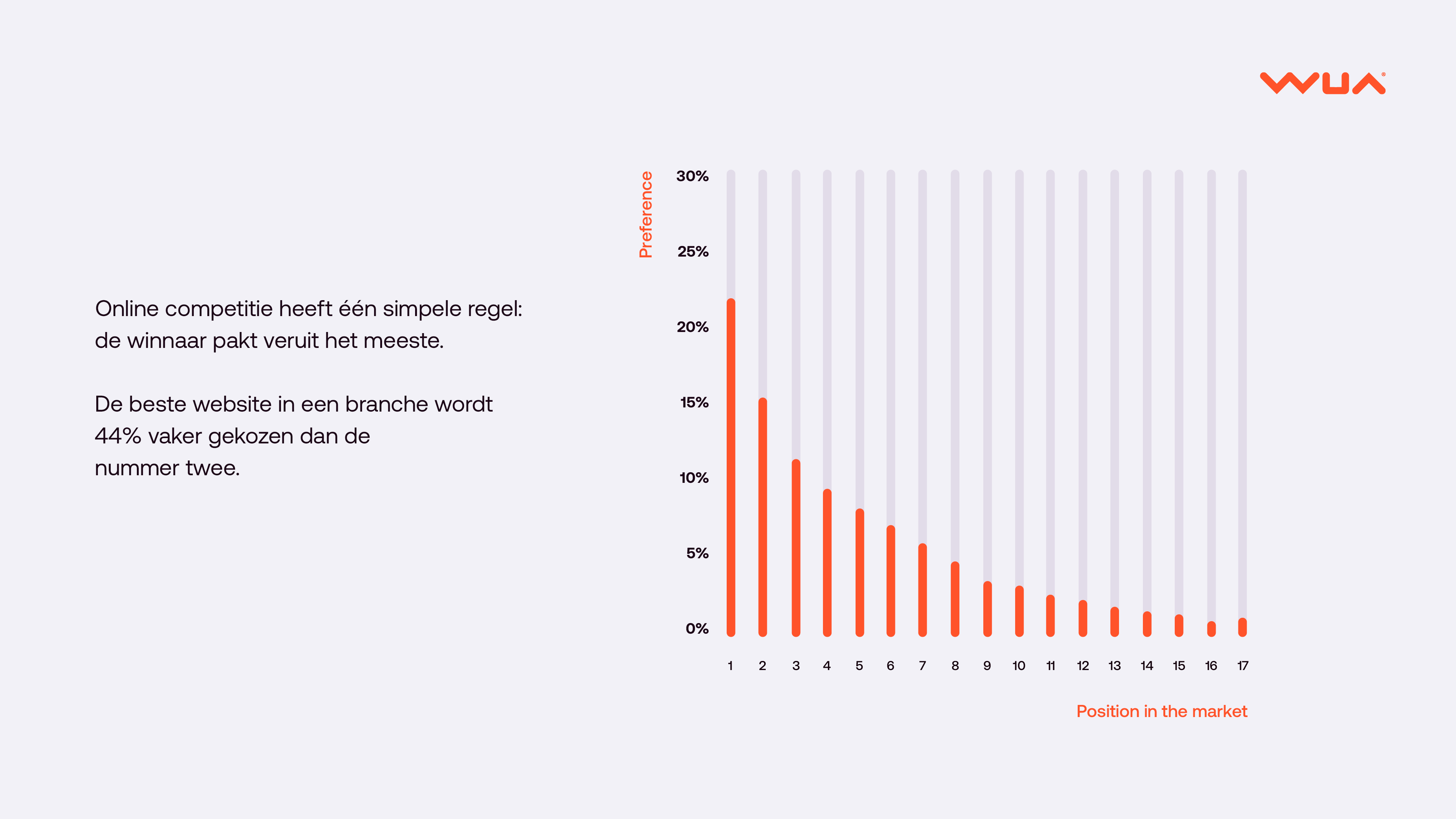 Now, concepts like conversion rate, page views, and customer preference are mainly holistic. You still don't learn from them what exactly you need to improve in your online marketing to ultimately leave your competition behind.
Customer experience benchmarking per phase
In the WUA! benchmark, we divide the customer journey into six parts and measure how each part performs. In the model below, the first step is the findability of your website and the last step is the final transaction. Everything in between is the customer experience (CX) on your website. This is where you build the customer relationship and convince the visitor to buy from you. ! By having potential buyers make this journey in free exploration and measuring their experiences at competing sites, a detailed benchmark emerges. This teaches you exactly what a customer experiences at your competitor and why they might choose your competitor. Are they found faster? Are they more successful in convincing the visitor? Is it easier to make the purchase? This way you learn at which points you need to improve the customer journey to ultimately increase your conversion. This allows you to set ambitious goals that you achieve in manageable steps. By regularly measuring where you stand compared to your competition, you keep making better steps and your website naturally becomes the absolute best for your customers.