general
2 minwhitepaper
Learn how decision aids lower cognitive load and guide visitors to the right choice. Includes real examples from Pearle and Gamma, plus a practical checklist.
By Linda
When visitors land on a page full of product options, the moment they realize they have to choose is often the moment they start thinking about leaving. This whitepaper by WUA explains why choice paralysis is fundamentally a working-memory problem and how decision aids can solve it.
People can only hold a few pieces of information in mind at once. When a page asks visitors to compare multiple options across multiple attributes simultaneously, the cognitive cost rises quickly. Most visitors respond by picking the cheapest, picking the first, or simply leaving. Adding more comparison tables or spec sheets only makes things worse.
A good decision aid does the heavy lifting for the visitor. It asks simple, task-oriented questions, translates the answers into a fitting recommendation, and presents a result the visitor can trust. The visitor's job shifts from "figure it out" to "confirm a recommendation."
The whitepaper illustrates this principle with two Dutch e-commerce cases:
The whitepaper closes with a seven-point checklist to help teams evaluate whether their decision aid is genuinely reducing cognitive load. Key questions cover entry point visibility, question framing in the visitor's own language, single-question steps, progress indicators, soft defaults, and dual paths forward on the result page.
If your current flow asks visitors to do too much cognitive work themselves, conversion will suffer. Review your decision aid against the checklist in this whitepaper, and consider where small, targeted improvements to your guidance can make a measurable impact.
When visitors land on a page full of product options, the moment they realize they have to choose is often the moment they start thinking about leaving. This whitepaper by WUA explains why choice paralysis is fundamentally a working-memory problem and how decision aids can solve it.
People can only hold a few pieces of information in mind at once. When a page asks visitors to compare multiple options across multiple attributes simultaneously, the cognitive cost rises quickly. Most visitors respond by picking the cheapest, picking the first, or simply leaving. Adding more comparison tables or spec sheets only makes things worse.
A good decision aid does the heavy lifting for the visitor. It asks simple, task-oriented questions, translates the answers into a fitting recommendation, and presents a result the visitor can trust. The visitor's job shifts from "figure it out" to "confirm a recommendation."
The whitepaper illustrates this principle with two Dutch e-commerce cases:
The whitepaper closes with a seven-point checklist to help teams evaluate whether their decision aid is genuinely reducing cognitive load. Key questions cover entry point visibility, question framing in the visitor's own language, single-question steps, progress indicators, soft defaults, and dual paths forward on the result page.
If your current flow asks visitors to do too much cognitive work themselves, conversion will suffer. Review your decision aid against the checklist in this whitepaper, and consider where small, targeted improvements to your guidance can make a measurable impact.
Introduction: Choice Paralysis and the Role of Decision Aids
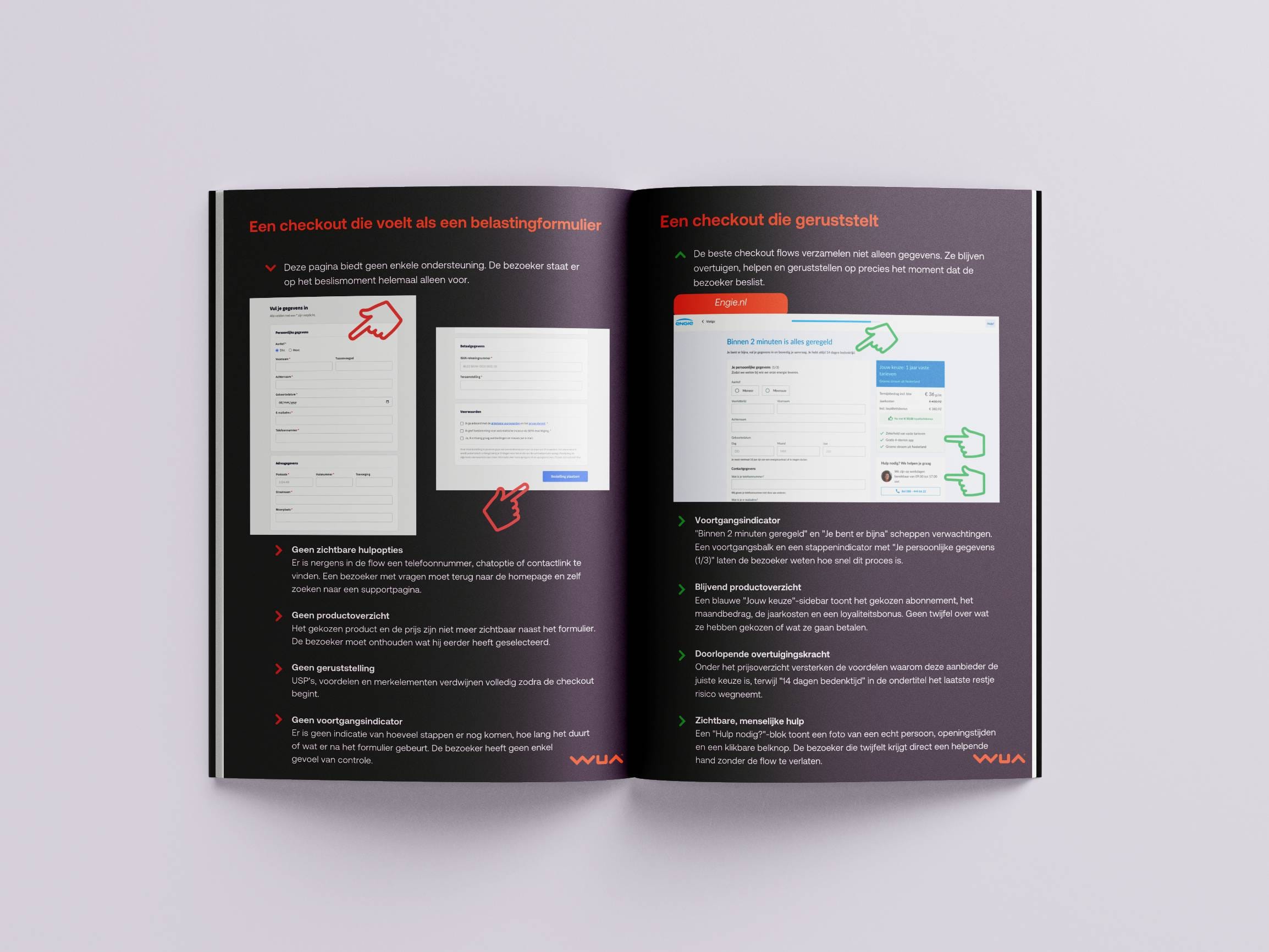
Choice paralysis is a working-memory problem: too many options increase cognitive cost and drive visitors away. A well-designed decision aid shifts the visitor's role from figuring it out to simply confirming a recommendation.
How to Guide Visitors to the Right Pick
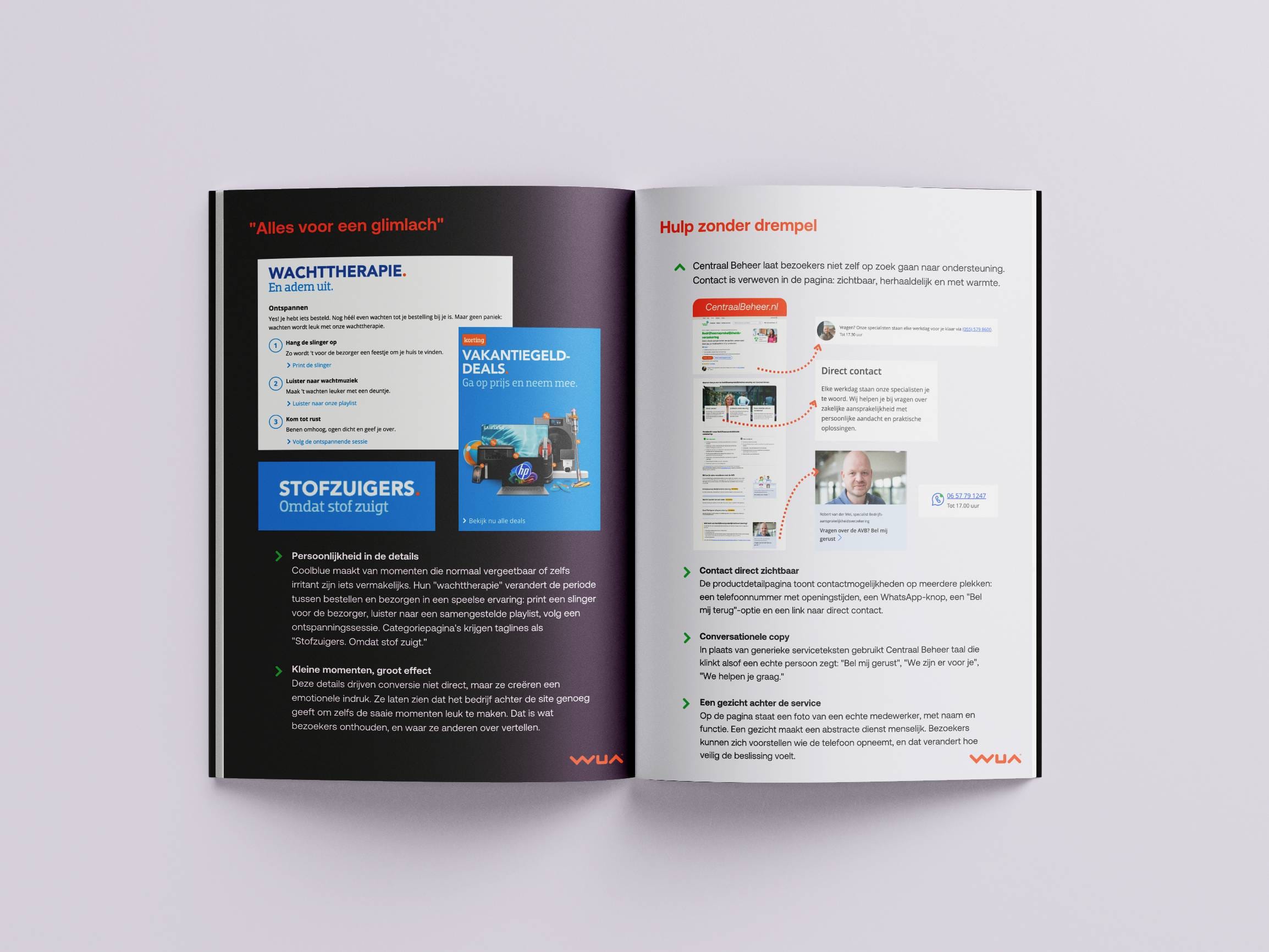
Most websites respond to choice overload by adding more information, but visitors actually need help choosing. The whitepaper introduces two real-world examples built on the same behavioral logic to illustrate how guidance reduces friction.
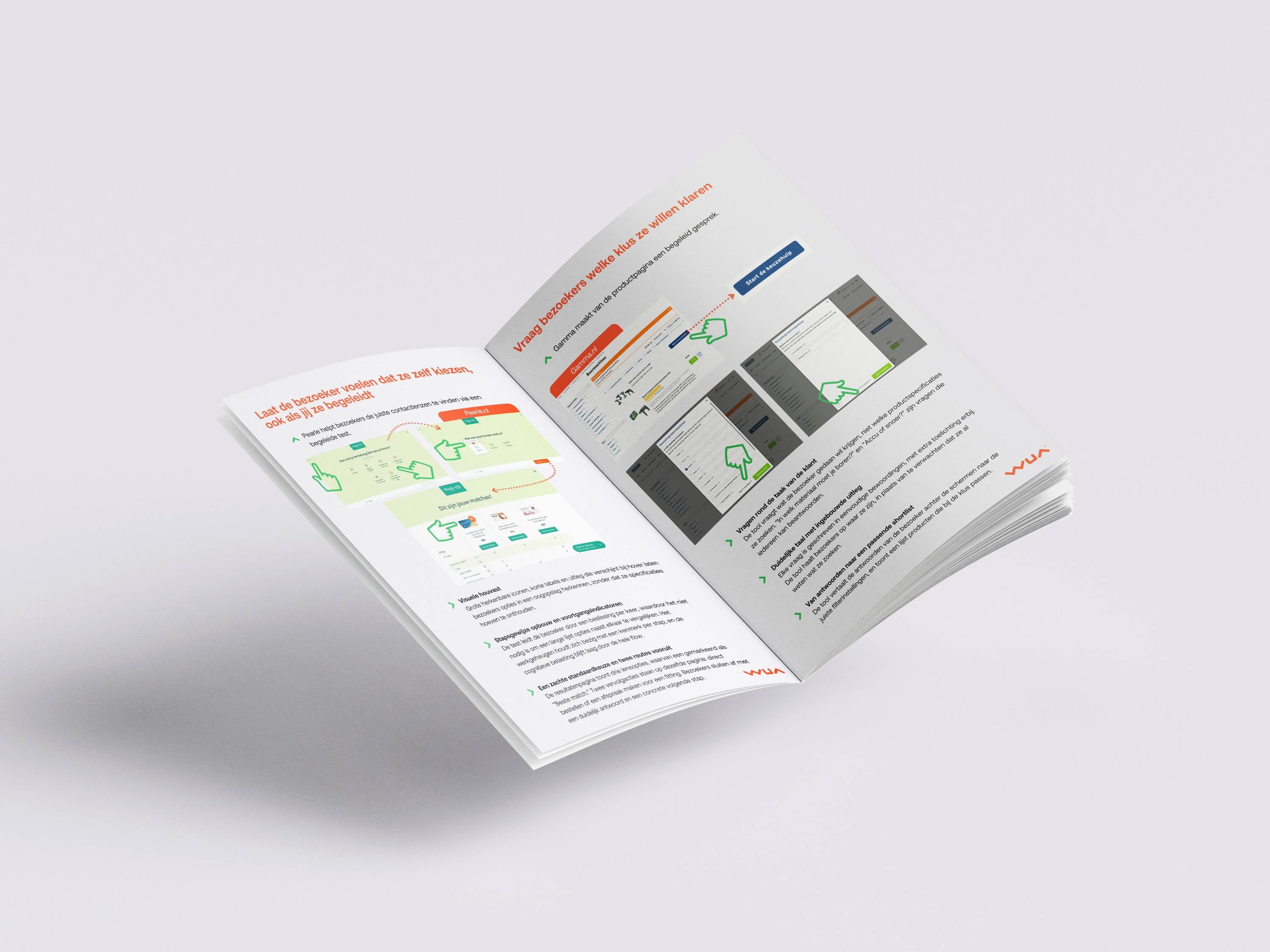
Case Study: Pearle.nl – Guided Contact Lens Finder
Pearle uses visual scaffolding, step-by-step sequencing, and a soft default 'best match' result to lower cognitive load. The result page offers two clear paths forward: buy now or book a fitting consultation.
Case Study: Gamma.nl – Turning a Product Listing into a Conversation
Gamma reframes product selection around the customer's job-to-be-done, using plain language and built-in guidance instead of technical specs. Visitor answers are translated into filter settings behind the scenes, producing a tailored product shortlist.
Checklist: How to Evaluate Your Decision Aid
A practical checklist of seven questions helps teams assess whether their decision aid is genuinely doing cognitive work for visitors. Topics covered include entry point visibility, question framing, progress indicators, and result page design.
Next Steps: Optimize Your Decision Aid with WUA
WUA invites readers to book a free 30-minute call to identify where visitors are doing too much cognitive work and where targeted improvements can drive conversion. Contact details for Digital Research Consultant Merel Schouten are provided.
Enter your email and get instant access to all our content: 250+ articles, case studies, masterclass recordings, and whitepapers.
Already registered? Enter your email to get instant access again.
Discover how WUA can help you outperform the competition.
Get in touch