retail
2 minwhitepaper
Discover how a personal approach to brand perception builds online trust. Learn from Coolblue and Centraal Beheer with actionable best practices.
By Linda
Trust is not built by product pages alone. This whitepaper by WUA explores how brand perception is shaped by emotional signals — and why a personal, human approach to web design is one of the most effective ways to turn hesitant visitors into confident customers.
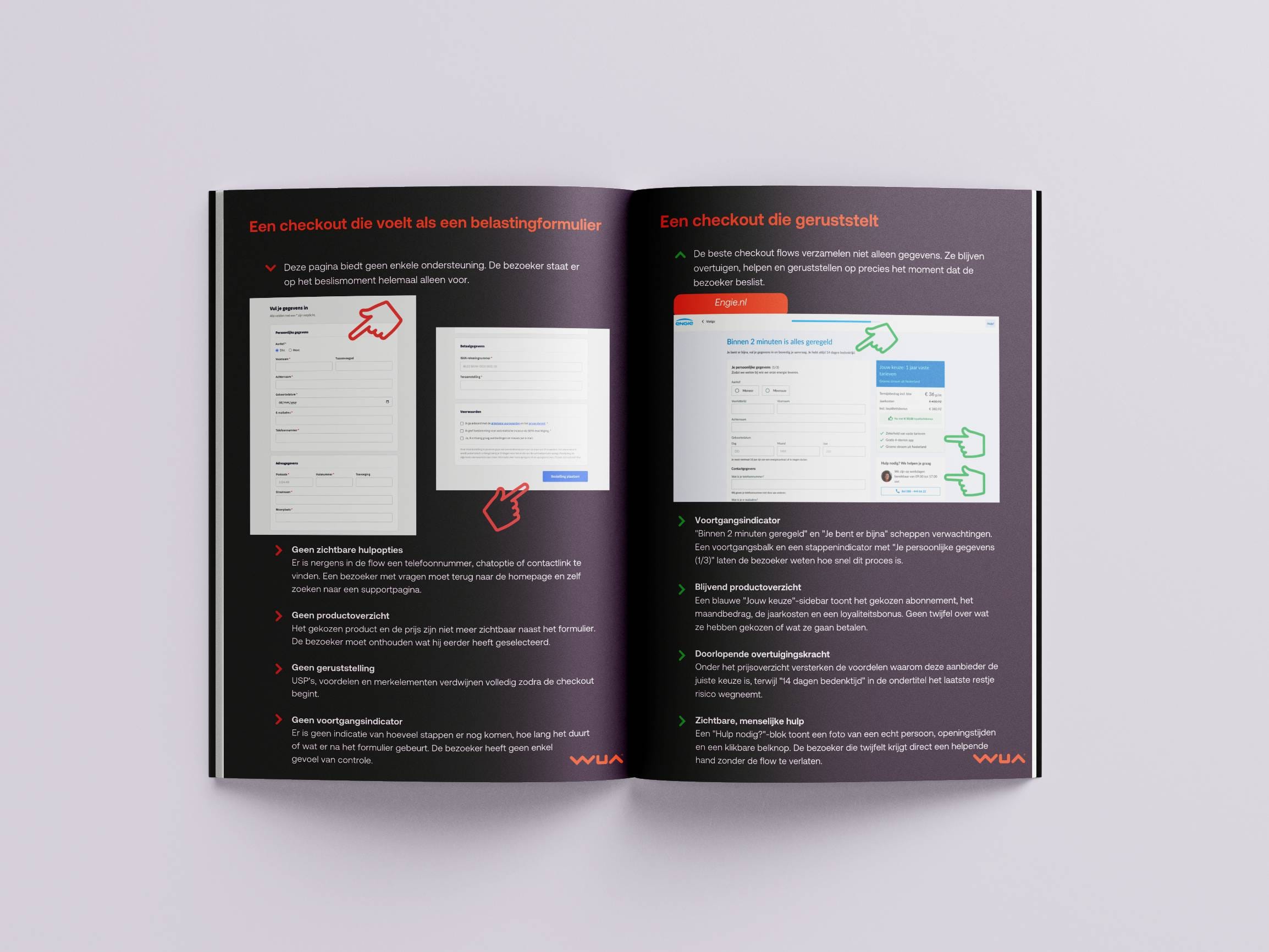
Most websites invest heavily in rational content: specs, pricing, and comparison tables. But trust is an emotional response, triggered by different signals entirely. When a website feels generic, corporate, or impersonal, visitors have no anchor for trust. The result is uncertainty, hesitation, and drop-off — even when the product itself is strong.
The whitepaper identifies four key trust signals that brands should actively design for:
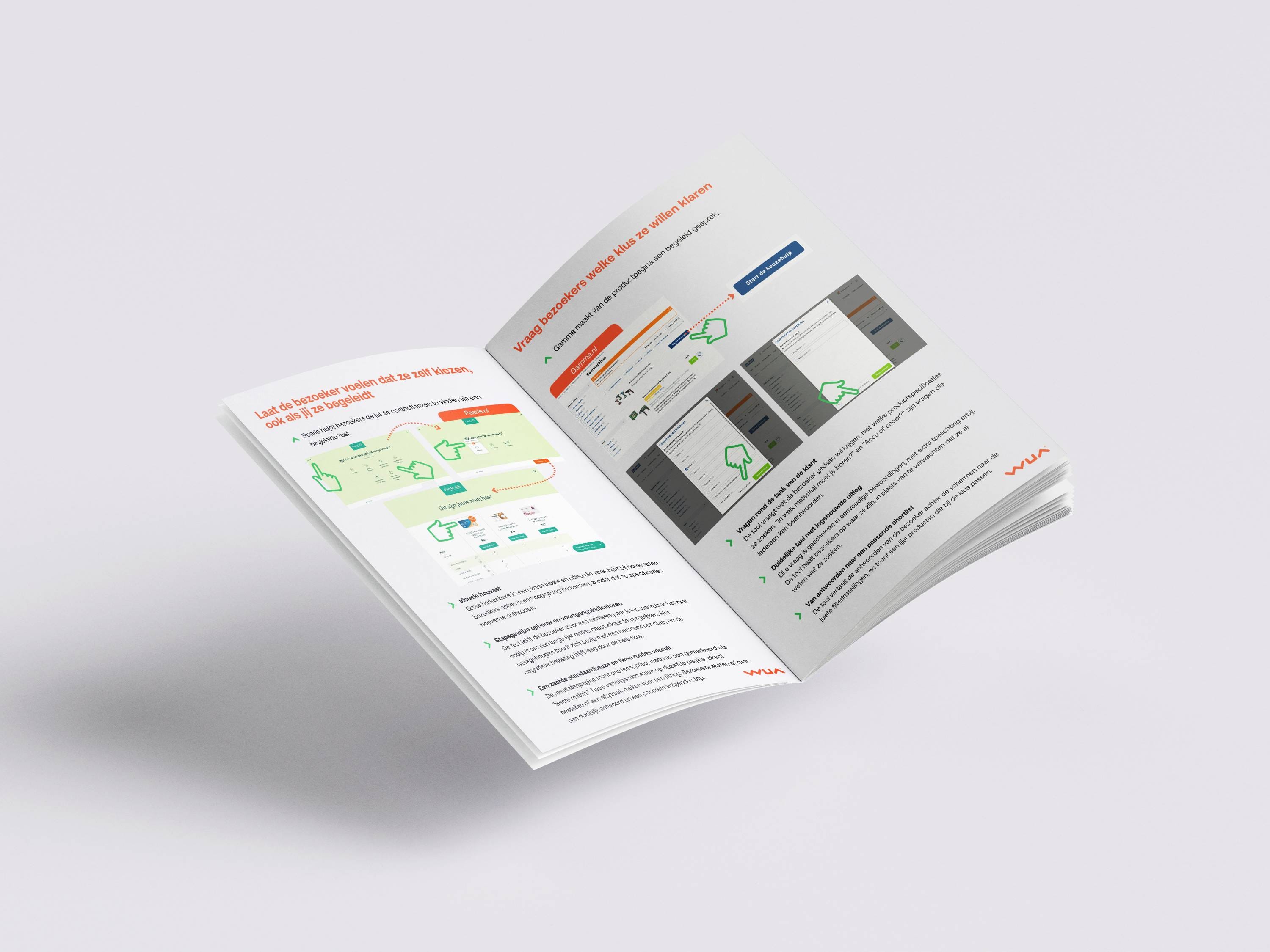
Coolblue and Centraal Beheer serve as concrete benchmarks. Coolblue brings its "everything for a smile" promise to life through real employee photography, curated expert recommendations, and playful micro-moments like "wait therapy." Centraal Beheer makes support feel effortless by embedding warm, human contact options directly into product pages — alongside a named employee photo that puts a face to the service.
Brand perception is not a branding exercise — it is a functional part of the customer journey. If your website does not communicate who you are before it communicates what you sell, you are leaving trust on the table. Use the included self-assessment checklist to identify where your experience falls short, and where a more personal approach could have the most impact.
Trust is not built by product pages alone. This whitepaper by WUA explores how brand perception is shaped by emotional signals — and why a personal, human approach to web design is one of the most effective ways to turn hesitant visitors into confident customers.
Most websites invest heavily in rational content: specs, pricing, and comparison tables. But trust is an emotional response, triggered by different signals entirely. When a website feels generic, corporate, or impersonal, visitors have no anchor for trust. The result is uncertainty, hesitation, and drop-off — even when the product itself is strong.
The whitepaper identifies four key trust signals that brands should actively design for:
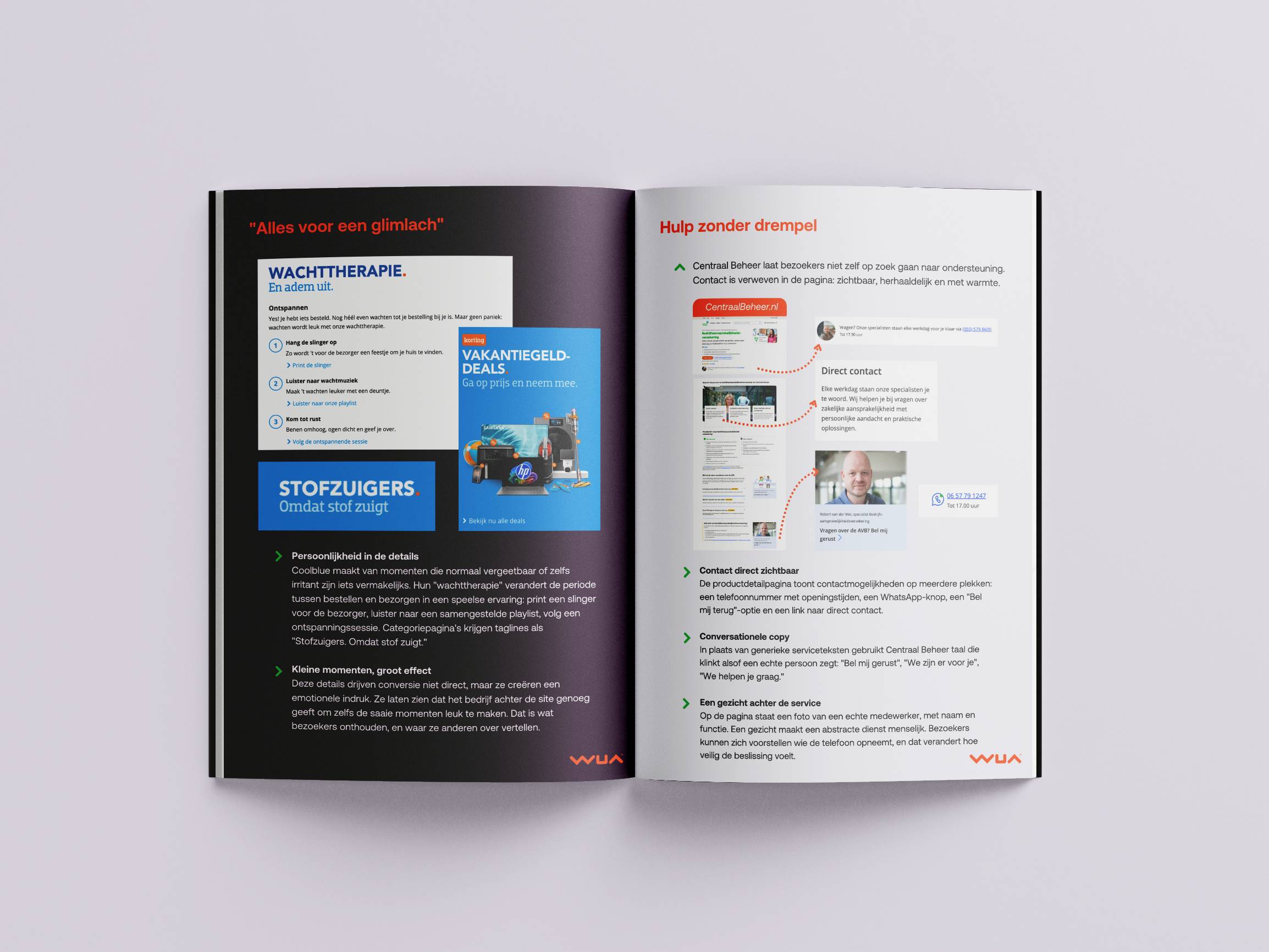
Coolblue and Centraal Beheer serve as concrete benchmarks. Coolblue brings its "everything for a smile" promise to life through real employee photography, curated expert recommendations, and playful micro-moments like "wait therapy." Centraal Beheer makes support feel effortless by embedding warm, human contact options directly into product pages — alongside a named employee photo that puts a face to the service.
Brand perception is not a branding exercise — it is a functional part of the customer journey. If your website does not communicate who you are before it communicates what you sell, you are leaving trust on the table. Use the included self-assessment checklist to identify where your experience falls short, and where a more personal approach could have the most impact.
Introduction: Trust Is Built on Feeling, Not Features
Brand perception is shaped by emotional signals, not product specs. Generic experiences erode trust, while a personal connection lowers perceived risk for visitors.
People Buy From People, Even Online
Visitors decide within seconds whether they trust a brand, driven by instinct rather than rational product information. Tone of voice, imagery, and visible human presence are the real trust signals.
Coolblue: Living the Brand Promise on Every Page
Coolblue demonstrates customer-centricity across the entire customer journey by featuring real employees and embedding expert advice that positions the brand as a trusted guide rather than just a retailer.
Coolblue: Personality in the Details
Coolblue transforms mundane moments like waiting for delivery into playful, memorable experiences. These small details create an emotional footprint that visitors remember and share.
Centraal Beheer: Making Help Feel Effortless
Centraal Beheer proactively weaves contact options and warm, conversational copy throughout their pages. Showing real employees by name and role makes the service feel human and the decision feel safe.
Checklist: Brand Perception Self-Assessment
A practical checklist of six questions to evaluate whether your website builds trust through a personal approach. Covers tone of voice, visual design, contact visibility, and brand promise delivery.
Next Step: Optimise Your Brand Perception
WUA invites brands to explore how real visitors experience their website in a short, no-obligation conversation. The goal is to identify concrete opportunities to make your brand feel more human and trustworthy.

Enter your email and get instant access to all our content: 250+ articles, case studies, masterclass recordings, and whitepapers.
Already registered? Enter your email to get instant access again.
Discover how WUA can help you outperform the competition.
Get in touch