A customer experience benchmark compares the CX within your organization with that of your key competitors. This yields interesting insights, for example why customers convert better or worse on your competitor's website than on yours. But what makes CX benchmarks so valuable? And what concrete benefits do you gain when you seriously start working with CX benchmarking?
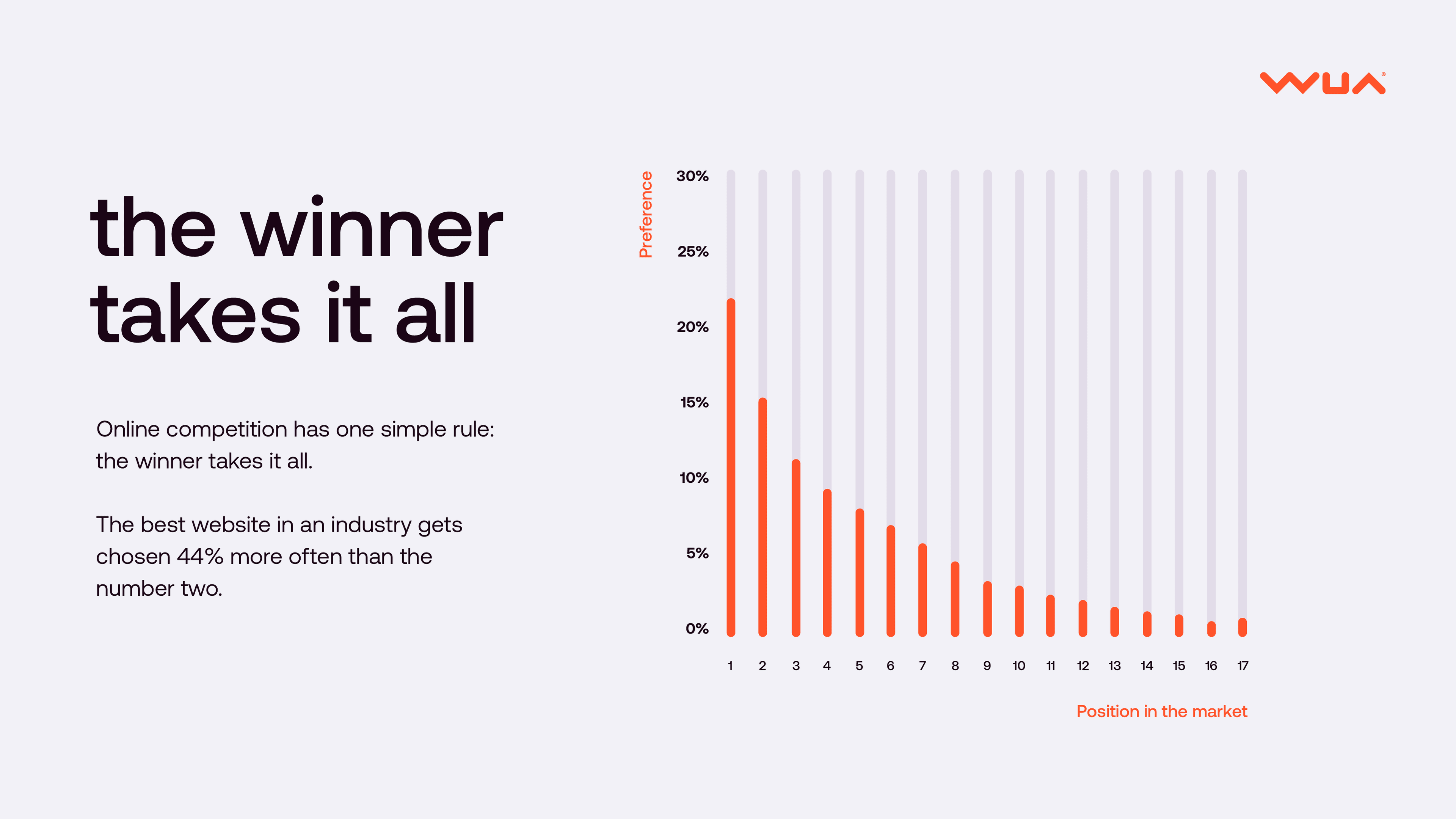
Delivering a good customer experience is more important than ever. Our research shows that websites and platforms with the number 1 position in terms of CX are used by consumers more than 44% more often than number two. CX benchmarks are an indispensable tool for structurally improving CX within an organization based on objective data. Moreover, it's crucial to improve faster than your competitors. 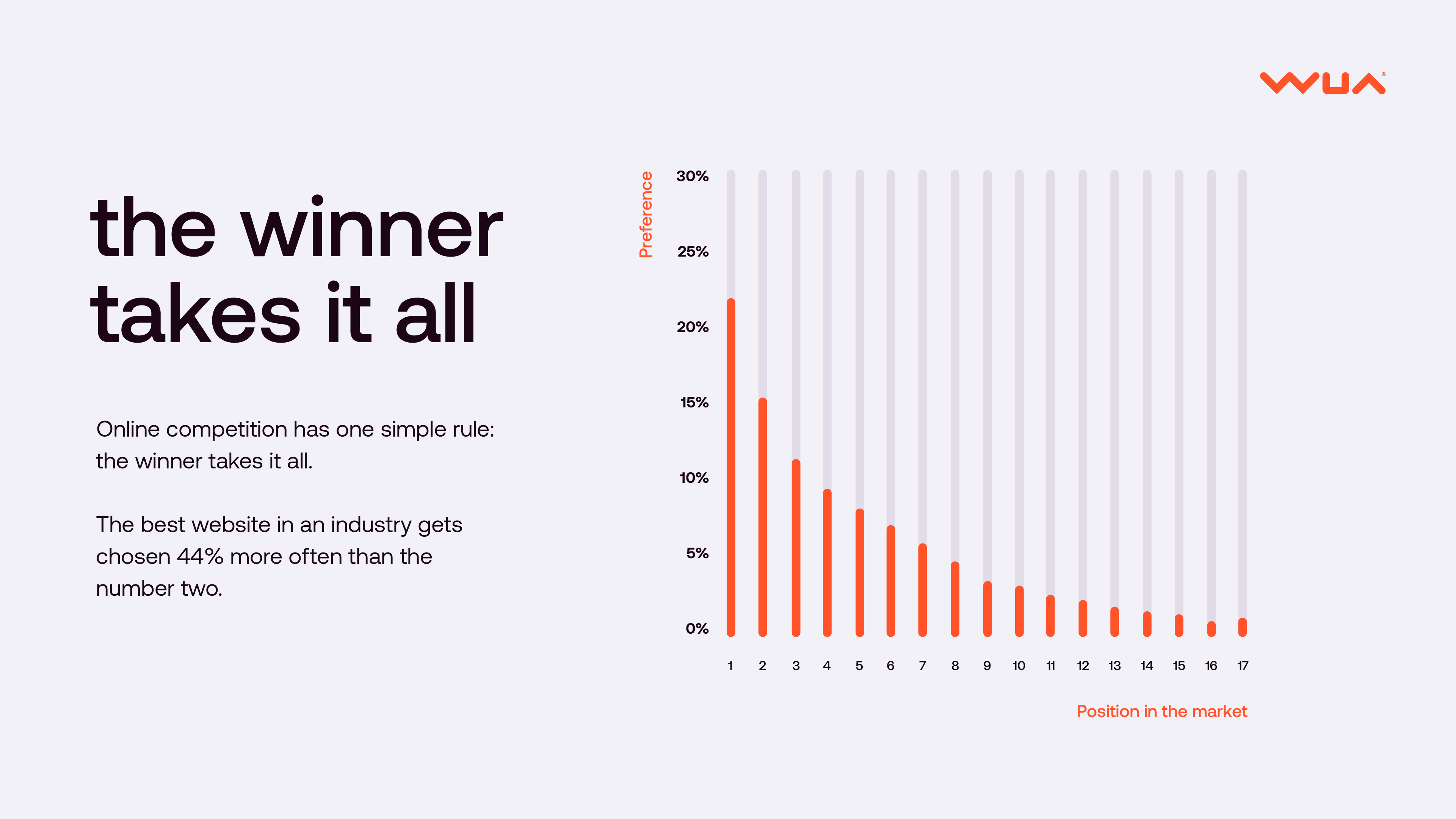 Conducting structural internal and external CX benchmarks continuously provides valuable insights that various departments within the organization can work with. If you don't do this, developing your CX feels like a rudderless ship. Decisions are made based on feeling and intuition, but that's more often wrong than right as a guideline. Moreover, this way you'll quickly be overtaken by competitors who do work in a structured and targeted manner using CX benchmarking. But why are these CX benchmarks so valuable and what concrete benefits can you expect when you start with them?
1: Consumers benchmark too
In all our CX research, we look at real customers making real purchases from real companies. This shows that consumers, albeit unconsciously, also benchmark. They try the app, website or platform of different providers and ultimately choose the party that offers the best experience. Your customer's journey therefore also takes place largely at your competitors' touchpoints. If you don't pay attention to this, you don't know what your target customers experience there. You're missing a lot of valuable information that you could have used to your advantage. If you conduct structural CX benchmarks, you always know exactly how your competitors are performing and what your customers experience with them.
2: Brand loyalty becomes convenience loyalty
89% of consumers nowadays consider switching if they have a poor service experience with their provider. Customers are therefore becoming less and less loyal to brands. They no longer stay with the same insurer, bank or energy supplier their entire life. Instead, they're loyal to convenience: the company that can offer them the smoothest and easiest customer journey wins their business. CX benchmarks show you during which steps of the customer journey your customers experience inconvenience compared to your competitors. These are important elements to implement improvements on. Without CX benchmarking, you'll never get this insight.
3: Competitors don't stand still
Your website, app and service experience in physical stores might currently be the best available in the market, but will that still be the case in a month? And in a year? What if your competitor launches a brand new platform next week that surpasses your digital touchpoints in all CX aspects? Competitors don't stand still. They also look at how you approach CX and respond accordingly. They want to stay one step ahead of you. The only way to prevent this from happening, and to get and stay ahead yourself, is to actively engage with CX benchmarking. And to convert the results of those benchmarks into concrete improvement actions as streamlined as possible.
4: Continuous new data and input for A/B testing
Continuous benchmarking provides continuous input you can work with. Structural benchmarking is therefore an excellent instrument to feed A/B tests. You start an improvement engine that runs continuously. Many organizations do conduct A/B tests, but their content consists of gut feeling. They test for the sake of testing. This happens because there's no structured, objective data stream that can be used as input. CX benchmarks form such a data stream. A/B tests become much more valuable this way.
5: The right focus for every department
A good CX doesn't only depend on a pleasantly functioning website or app. After all, the modern customer journey takes place omnichannel, where online and offline intersect and sales and service go hand in hand. CX therefore also includes, for example, a sales team that can answer customer questions well and quickly, a product that delivers on customer promises, and a marketing team that continuously knows how to strike the right chord. CX benchmarking helps bring focus to all departments that have impact on the customer experience at your organization. It provides concrete tools that a sales team, marketing team or product team can work with. For every department, it's crystal clear what needs to be done to contribute to CX objectives. An organization starts working better together and departments strengthen each other from their own role.
Winning the CX battle starts with learning
You become a leader in your industry by offering customers the best CX available. For this, you need to be willing to learn, both from your customers and from your competitors. CX benchmarks provide objective, substantiated insight into what customers prefer and what works well or poorly at competitors. This information is indispensable for any organization that wants to seriously work on CX improvement and make a bid for that leadership position.