Every organization measures performance, but numbers rarely tell the whole story. Statistics like conversion or bounce rate show what happened, but not why. That's where Customer Experience (CX) comes in. CX data shows how people actually experience your website or app and why they choose one brand over another. The challenge is translating those 'softer' insights into something the boardroom understands: impact and competitive advantage. In this blog, you'll read about five principles that help digital teams make that translation - from customer insight to strategic impact.
1. Measure what customers actually experience
Two websites can have the same conversion ratio and still feel completely different. One looks intuitive and trustworthy, the other causes frustration but still converts. To understand that difference, you need to measure not only what visitors do, but also how they experience it. WUA's Website Experience Model looks at seven elements that together determine a brand's complete online picture: design, navigation, scannability, technical functionality, product offering, price perception, and brand perception. 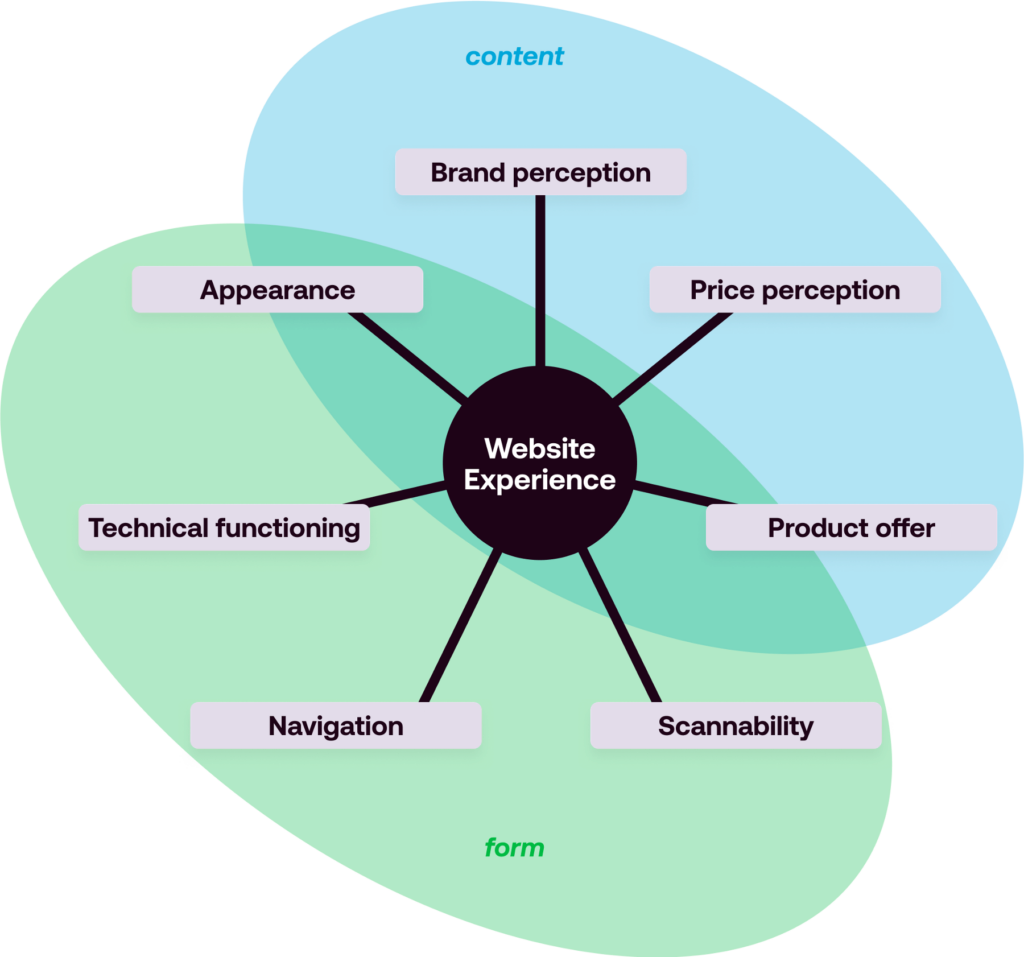 Each element influences how visitors interpret your brand and how likely they are to convert. By benchmarking these elements against competitors, you see exactly where your experience is strong and where friction occurs. This helps align internal teams better and shows where the biggest challenges lie compared to your main competitors.
2. Use benchmarking to see where you stand
Internal statistics show if you're moving forward. Benchmarking shows if you're winning. Your own data might look positive:
-
Rising conversion.
-
Higher satisfaction.
-
Declining bounce percentage.
But without context, you don't know if that's enough. It could be that your first-hand data shows growth while your two main competitors are growing even faster and conquering larger market share. Benchmarking puts your performance in perspective. It compares your digital experience with direct competitors using a uniform method. This way, you see not only how you're performing, but also where you're gaining or losing ground. 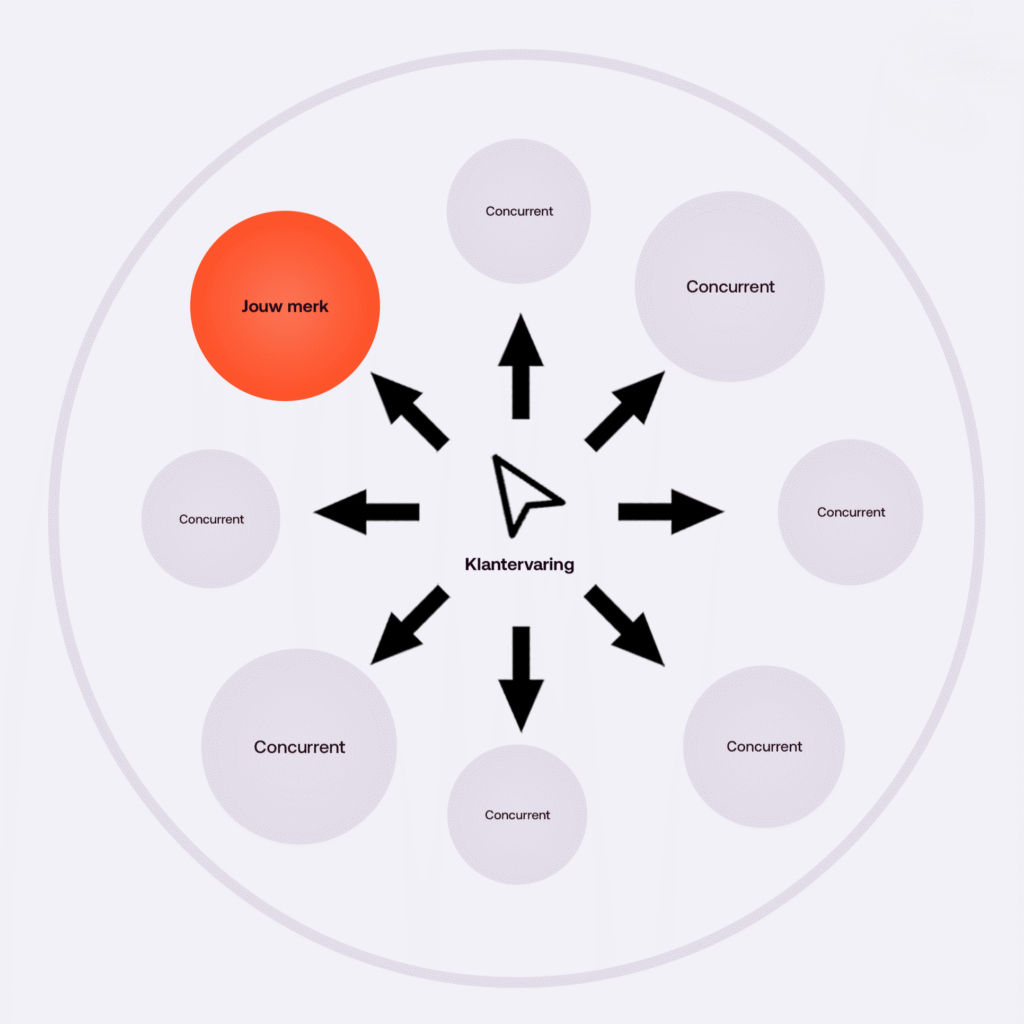 This is crucial information for strategic decisions. If the market is accelerating and you're growing slower than your competitors, you're missing opportunities you could have seized. Benchmarking makes that visible and helps you utilize your full growth potential. It also shows how quickly customer expectations are shifting. The standard is no longer set by the average sector, but by the best digital experience customers get elsewhere. Benchmarking keeps you sharp on that changing bar.
3. Put CX alongside your KPIs
Decision-makers steer on KPIs. Numbers like conversion, retention, and acquisition costs show how the company is performing. CX explains the human reasons behind those numbers. By linking CX insights to your KPIs, you get a complete picture of performance. Examples:
-
Once we improved the scannability of product pages, the bounce percentage dropped.
-
By improving and shortening the navigation in the customer journey, we saw a decline in support calls.
-
When we started working on our brand perception, we saw a clear correlation with higher customer loyalty and more repeat purchases.
Your own data shows the result. CX benchmarking shows the cause and how your performance relates to the rest of the market. By linking soft metrics like scannability, navigation, and brand perception to hard numbers, you make these improvements tangible for management. It also helps create internal support and can even lead to additional budget for further improvements.
4. Translate CX insights into strategic decisions
CX research only has value when it gives direction to decisions. The goal is not more data, but better focus on what really makes impact. Suppose your product offering and technical functionality score above market average, but your navigation lags behind. Then it's clear: improve navigation first. By linking CX data to business results, you can have the discussion in the same language as the boardroom:
-
How does this perception difference affect our conversion or market share?
-
Which CX themes have the biggest impact on revenue or loyalty?
-
What does it mean in practice if we close this gap?
This way, CX isn't seen as something 'soft', but as a measurable instrument for planning, investment, and growth. By continuously building small, successful business cases, you create a strong, evidence-based trajectory for the organization in the long term. A roadmap of CX improvements, linked to hard numbers, is a powerful tool to make impact visible.
5. Tell the story behind the numbers
Data only convinces when you explain what it means. Instead of reporting that your product offering score has risen a few points, it's better to explain what that means for the customer and for the business.
- For example: visitors found the offering easier to understand, which strengthened trust and led to 8% more completed applications.
You can strengthen this by also looking at trends over time. Many organizations do user testing or customer interviews themselves. These studies are small-scale but valuable. By linking results from these kinds of tests to CX data, you build evidence that shows how customer perception actually improves after optimization. This makes clear that CX not only delivers numbers, but tangible improvements in how customers experience your brand.
From insight to impact
Organizations that lead in CX treat it with the same discipline as financial data. They:
-
Measure the experience elements that determine trust, clarity, and perception.
-
Benchmark to understand their position in the market.
-
Combine CX insights with KPIs to provide context to results and determine new priorities.
The combination of internal KPIs and the context of 'soft' CX elements gives leaders the complete picture. That's the real value of CX: it gives direction to your strategy and proves that customer experience is a measurable growth accelerator.