In the competitive insurance market, price perception plays a crucial role. How do insurers convince customers of the value of their services through targeted pricing strategies, without actually lowering the premium? And what can you learn from this? At WUA, we study thousands of customer experiences every year, including in the highly competitive insurance sector. We collect both qualitative and quantitative data and analyze how the best-performing insurers beat the competition. From this, we've discovered best practices—quick wins that are valuable for any business and can be immediately deployed to improve the digital customer experience and increase conversion rates.
1. Price-related USPs and early information
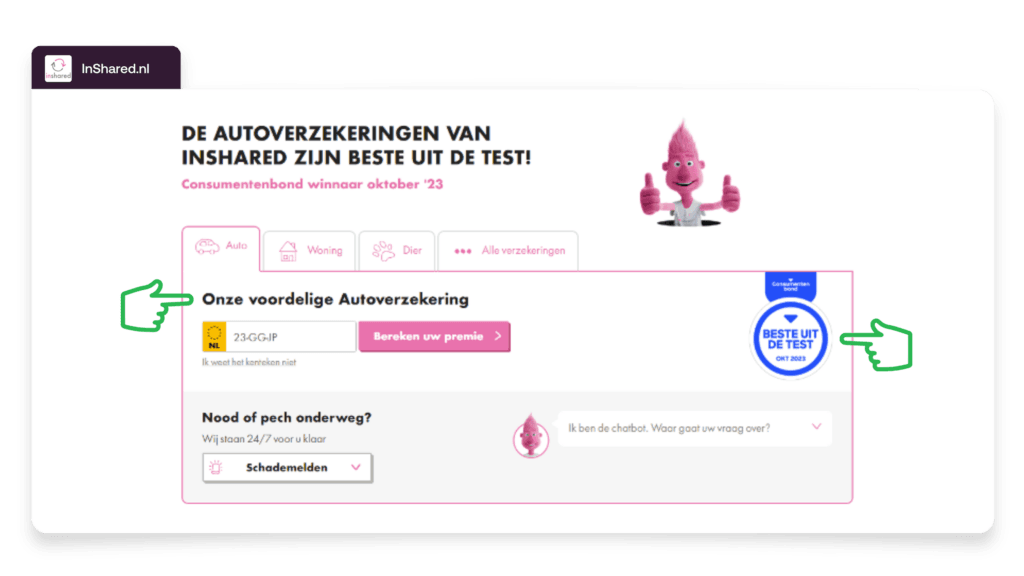
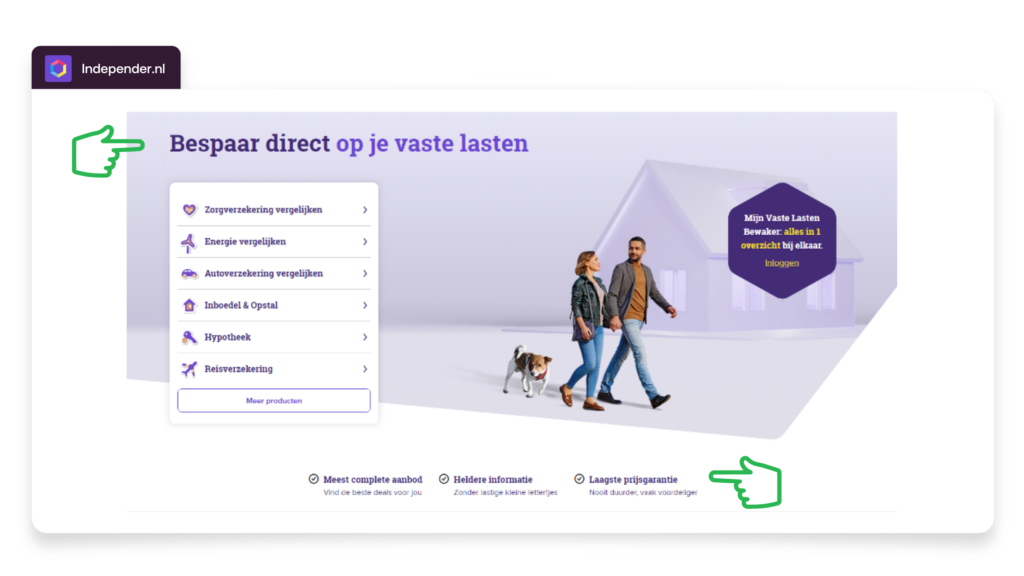
InShared.nl and Independer.nl focus on strengthening price perception by showing price-related benefits from the first interaction. By introducing elements like free coverage, savings opportunities, and lowest price guarantees early in the customer journey, the consumer feels directly engaged and convinced of the added value. 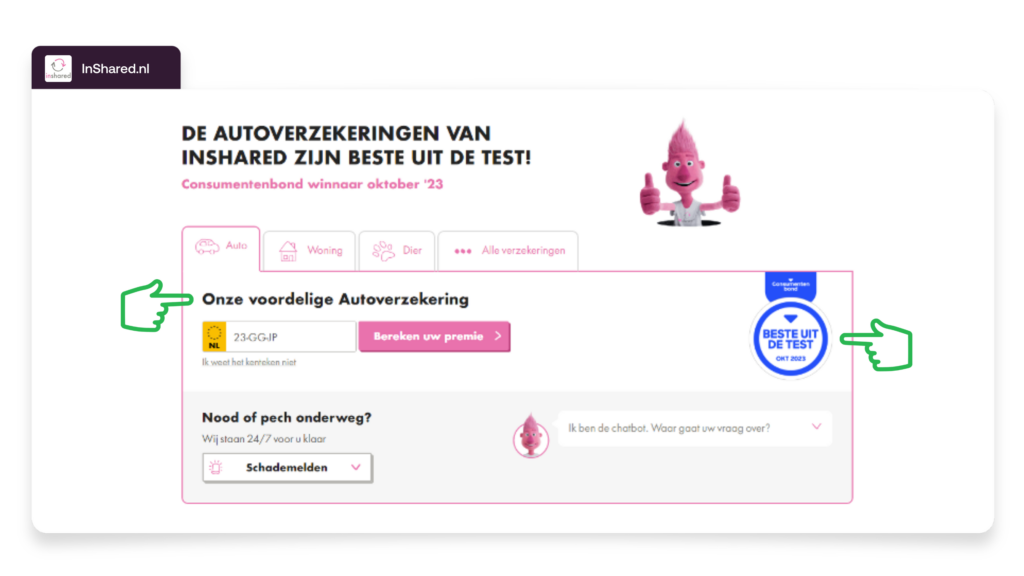
2. Be immediately transparent about your price
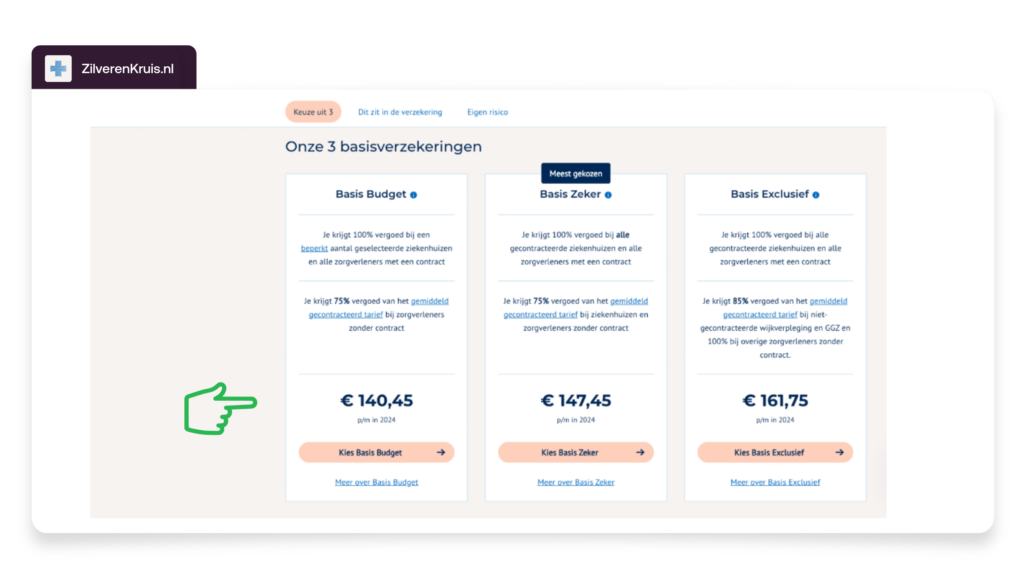
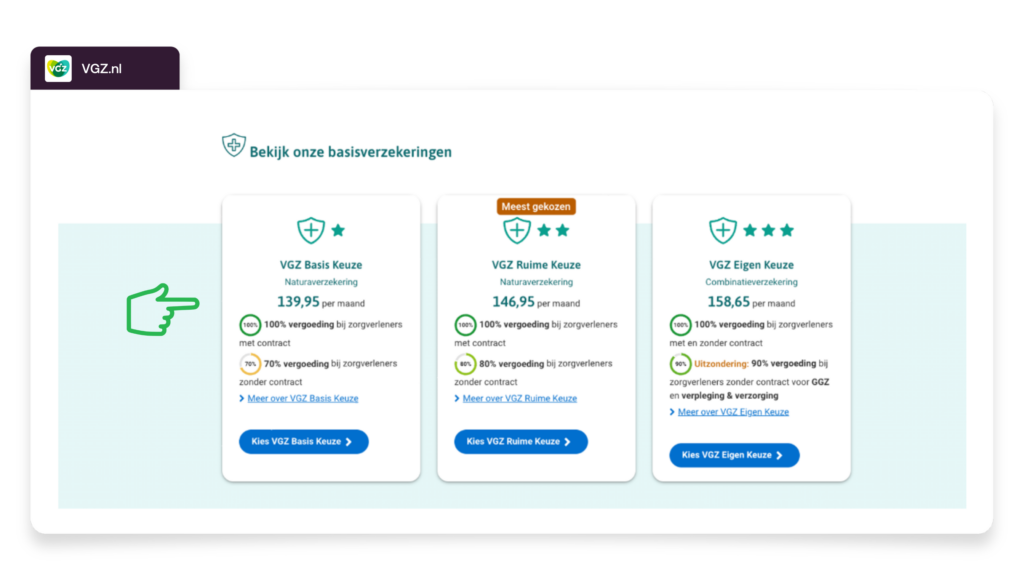
VGZ and ZilverenKruis show that it's possible to provide a premium indication without consumers having to share personal information directly. This increases trust and lowers the barrier to exploring the insurance further.
3. Present price positively throughout the entire customer journey
CentraalBeheer.nl convinces visitors by integrating price-related elements throughout the entire customer journey. From the first page, two price-related and one service-oriented unique selling propositions (USPs) are displayed. Lower on the page, benefits are clearly listed, repeatedly convincing the consumer of the value of the offer. In the premium calculation, the no-claims discount is immediately displayed when entering claim-free years. Finally, package prices are displayed in green, with the total premium amount circled in green. These visual elements ensure that price perception is influenced in a positive way. 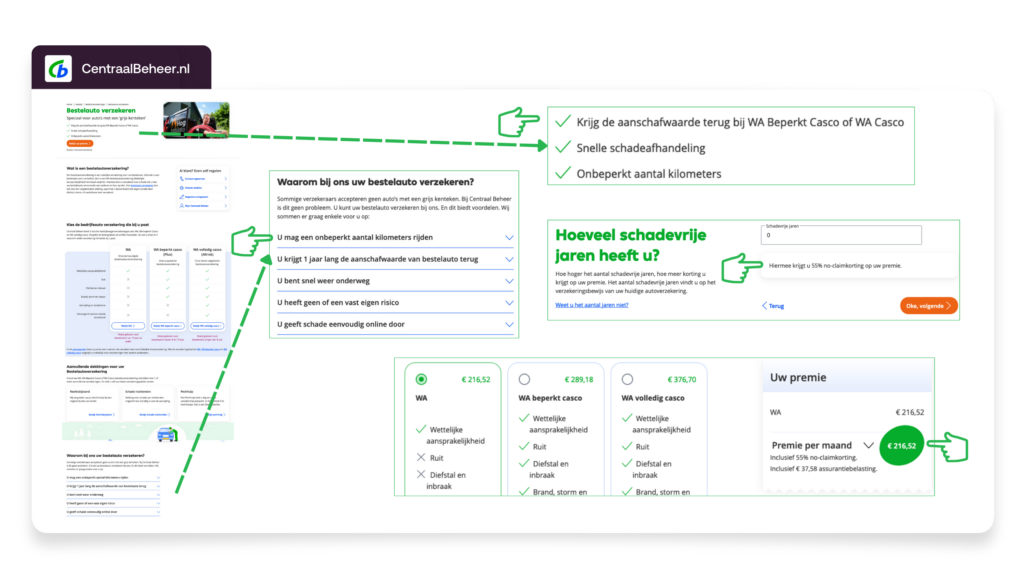
4. Using welcome discounts as a trigger for new customers
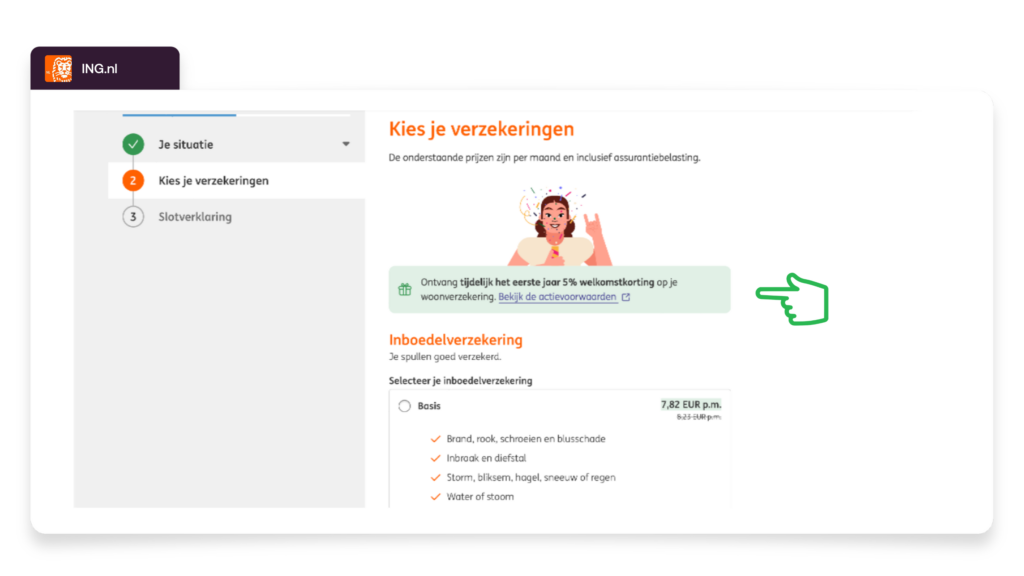
A welcome discount, as applied by ING.nl and ABNAMRO.nl, plays into consumers' need for a financial advantage when entering a new contract. This strategy lowers the barrier for new customers and improves price perception in favor of the insurer. 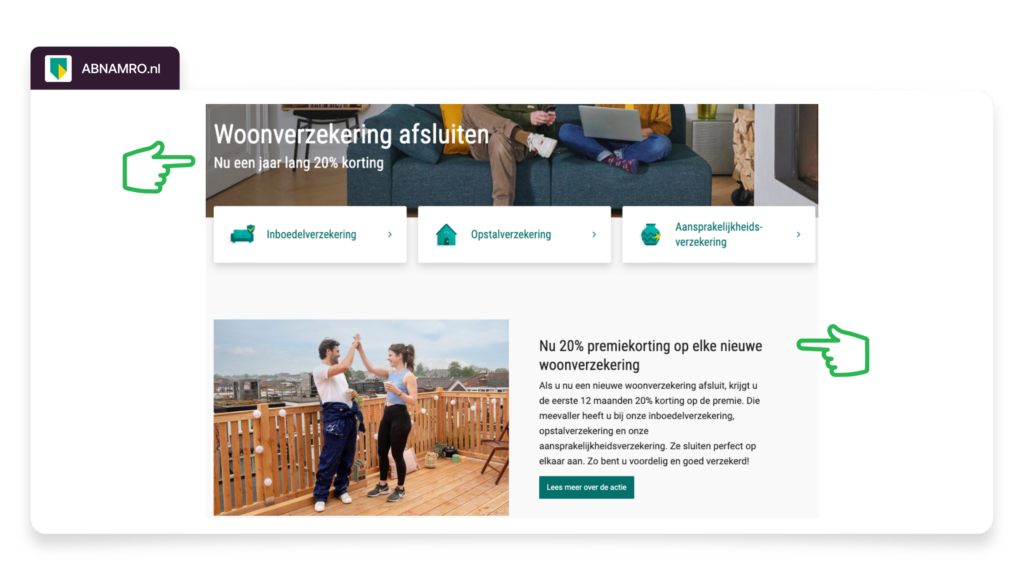
5. Active discount mention in premium calculation
Insurers like NN.nl and Univé actively offer package discounts during premium calculation, allowing the customer to immediately see the benefits. By making these discounts visible instead of hiding them on a separate page, they create a sense of value and transparency. 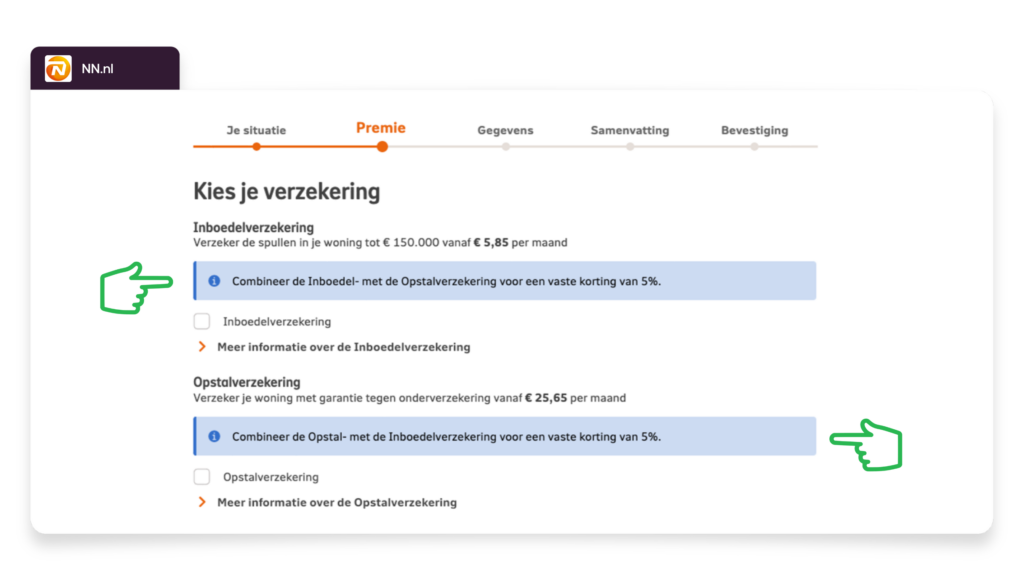
6. Communicating financial benefits as "gifts"
An example of creative price communication comes from InShared.nl, which presents legal expenses insurance as a "gift." This gives the consumer the feeling that they're receiving extra benefit, contributing to a positive image of the insurer. 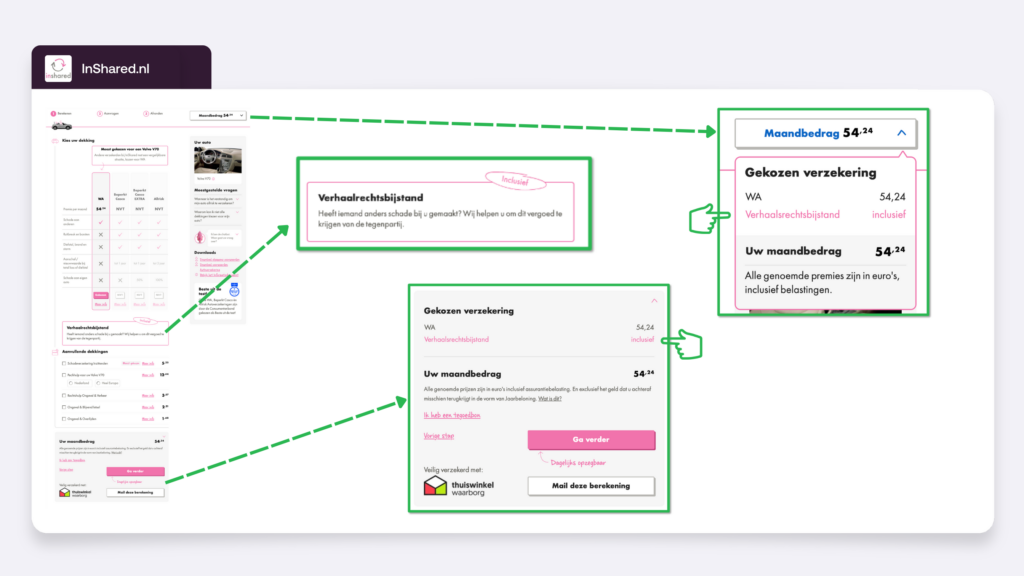
7. Smart, subtle improvements to price perception
Insurers like FBTO play smartly with price perception by, for example, setting liability insurance to off by default or to the cheapest option. This keeps the base price attractive without changing the actual costs. 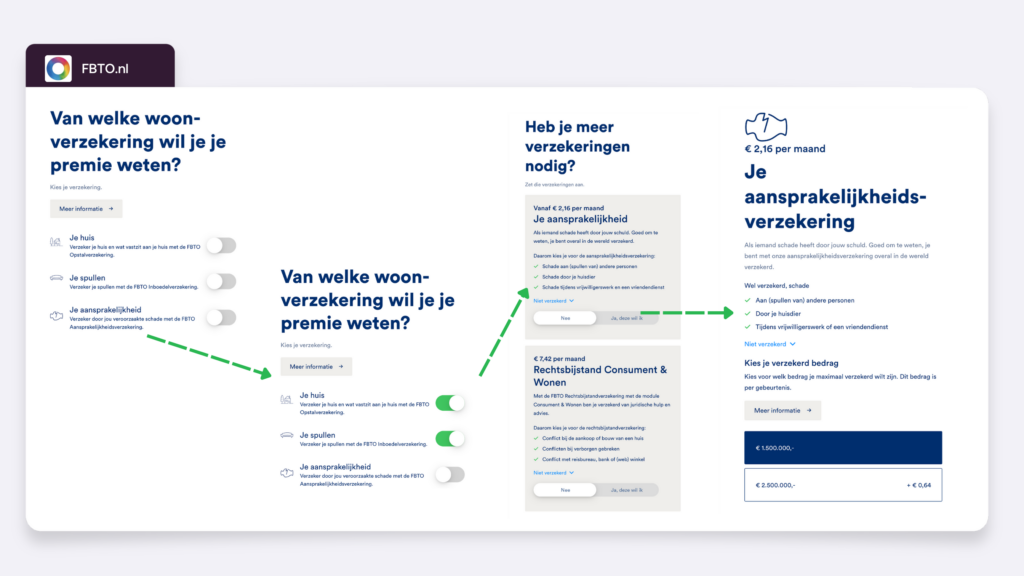
Conclusion
Price communication is a powerful tool to position your brand in the market and convince customers of the value you provide. Whether you choose direct discounts, psychological pricing strategies, or emphasizing financial benefits in the customer journey, it's about ensuring your pricing strategy tells a credible story that convinces customers.