48% of Dutch people who took out health insurance last December consulted a comparison website beforehand. Half of them actually concluded the insurance through the comparison website. Comparison websites are also incredibly popular in other industries and achieve high conversion rates. What lies behind this large-scale success of comparison sites and, more importantly, what can your organization learn from it?
For your new energy contract you go to Gaslicht.com, for your new mobile subscription to Belsimpel and for a new health insurance to Independer. Comparison websites are incredibly successful in the Netherlands and beyond, becoming more popular each year. On these sites, consumers can not only compare different providers of a particular service, but can also directly conclude a contract. The sale of subscriptions and contracts via such platforms is attractive for their operators, because no physical products need to be sent to customers. This approach brings in substantial revenue for these website operators. If you sell your services partly through comparison websites, you know that a commission must be paid for every transaction via such a site. Selling via comparison websites therefore generates more sales and market share, but the margin is smaller than when you sell directly via your own internal channels. With your own website, you therefore compete with comparison websites, despite the fact that they also sell your products and services. Coming out on top in this battle with comparison websites can therefore be very lucrative, because you then spend much less on commissions. But how do you effectively engage in this battle?
Role of comparison sites largest in health, car and life insurance markets
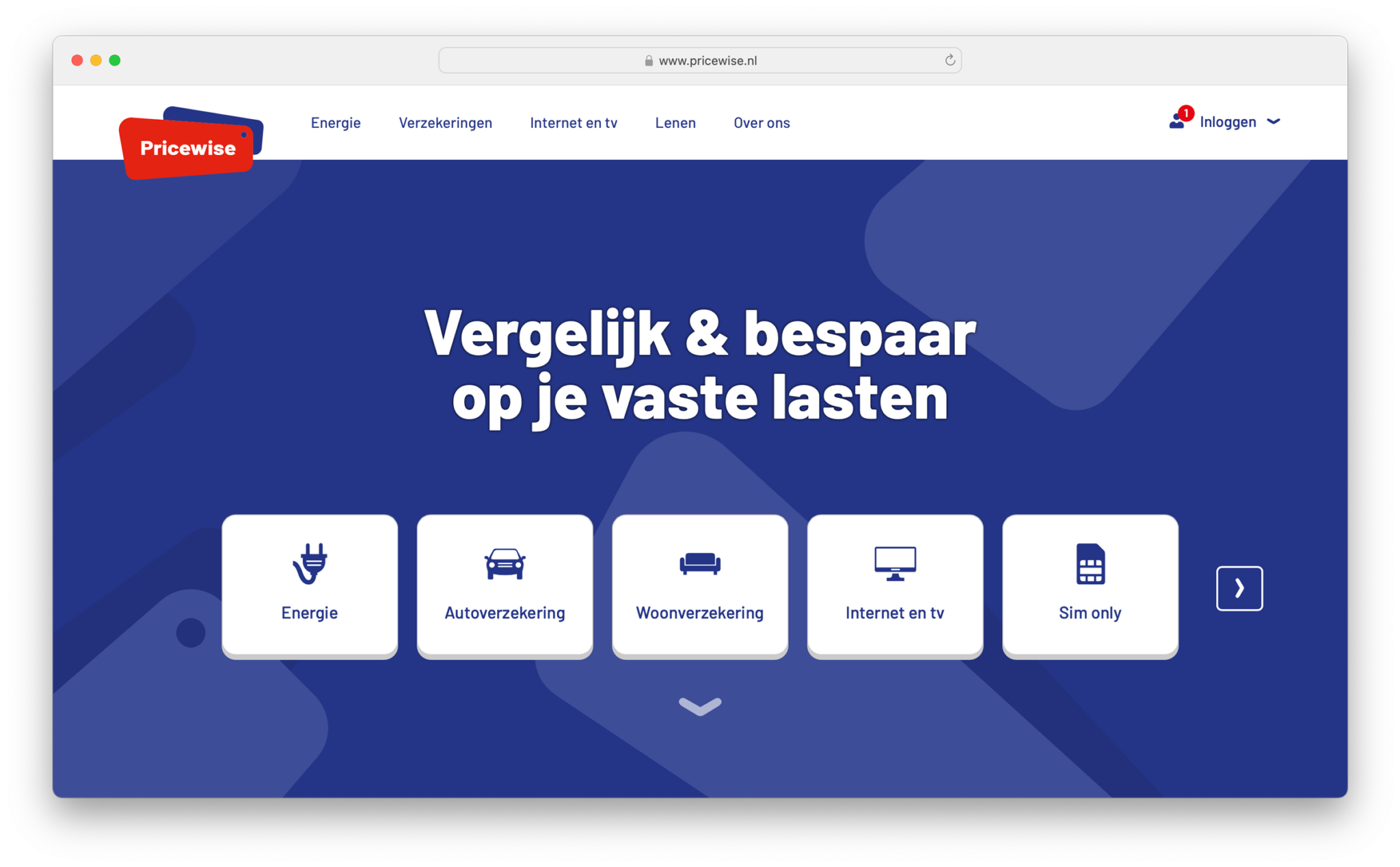
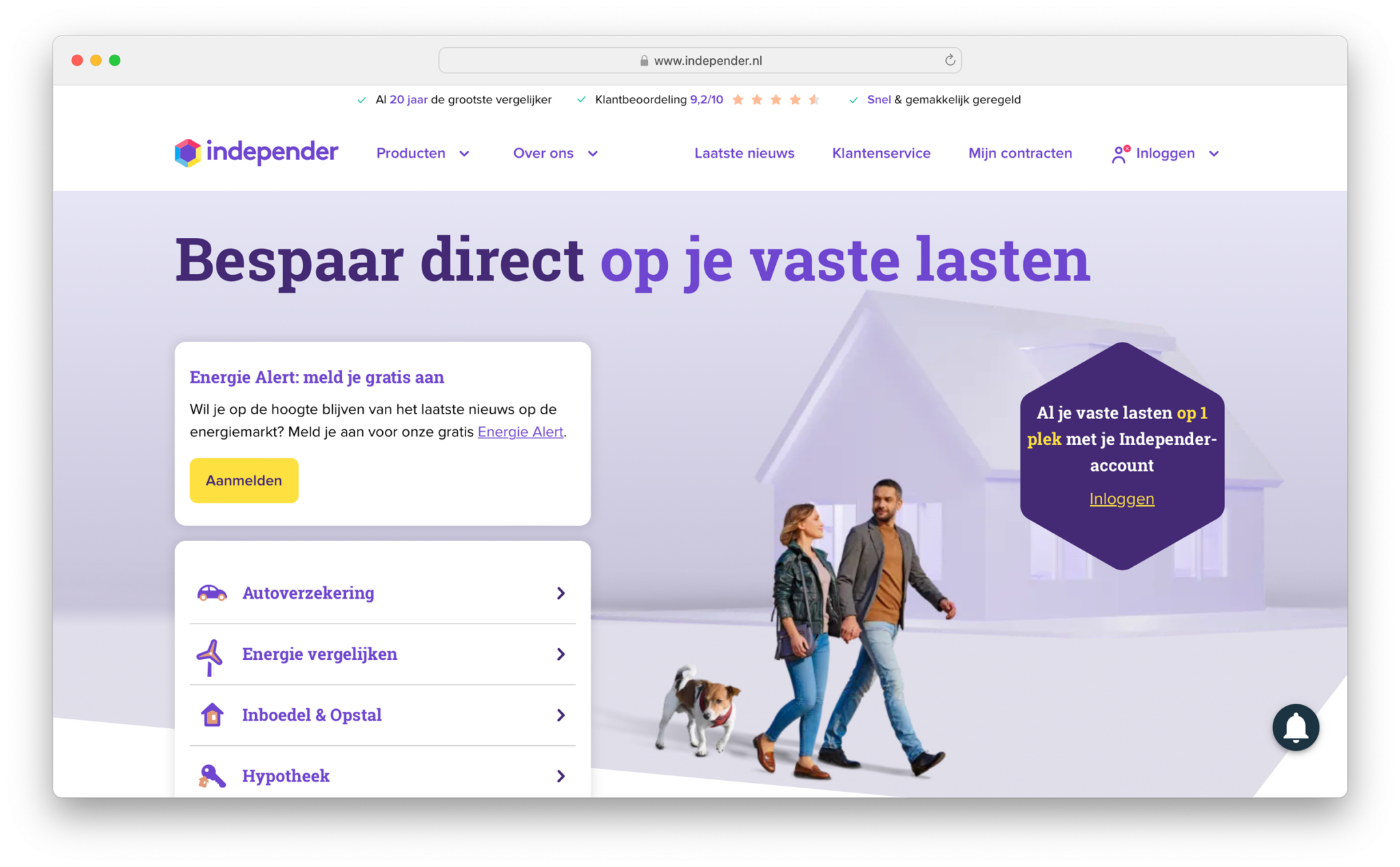
Comparison websites don't have an equally strong presence in every industry. Our market research shows that comparison websites have a large market share especially in the health, car and life insurance sector. This involves 21 to 25% of consumers who take out a new health insurance, car insurance or life insurance via a comparison site. Other sectors where consumers relatively often use comparison sites are the energy market, mortgage providers and providers for internet and mobile telephony. Of all Dutch comparison websites, Independer stands out when it comes to both discoverability and conversion. 35% of Dutch consumers who use a comparison site use Independer. Another popular comparison site is Pricewise, with about 17% market share. Both Independer and Pricewise are active in multiple markets. Zooming in on comparison sites for specific markets, Zorgkiezer and Belsimpel still stand out with a market share of around 5%. Comparison sites that bring together multiple types of services under one roof are therefore the most popular. But what do consumers mainly do when they use such a comparison site?
Consumers use comparison sites mainly for orientation
Although comparison websites only earn something once a consumer converts and thus concludes a subscription or contract via the site, the majority of consumers mainly use these sites for orientation. In the health insurance industry, we see in our research that orientation on rates (48%) and general information and conditions (28%) are the most important reasons for consumers to use a site like Independer. 76% of consumers therefore don't primarily go to Independer to take out insurance, but want information about what's available and what rates look like. Nevertheless, comparison sites have been achieving excellent conversion figures for years. One in four Dutch people who took out health insurance last year did so via a comparison website. Market leader Independer recorded a conversion of about one in three in 2022. These are figures that many organizations would be envious of. What can be learned from platforms like Independer when it comes to achieving such excellent conversions?
Added value of comparison websites: superior customer experience
Of course, comparison websites offer a number of customer benefits that you as an organization will be less likely to offer to website visitors. For example, consumers often have the idea that they get transparent, independent advice on comparison sites, which they don't expect on the sites of providers themselves. Comparison websites also make it easy to compare different providers on price and conditions, for example. This way, consumers expect to save time and money. Moreover, some comparison websites reinvest part of their commissions to distribute additional discounts, making consumers better off on such sites than when they go directly to the relevant company. However, consumers especially like to use comparison sites because they provide convenience. From orientation to comparing prices and from gathering information to ultimately concluding a contract: the most successful comparison websites have managed to create a seamless digital process. They distinguish themselves with a superior customer experience and have put the interests of their customers at the center of their digital experience design. They truly add value to the customer journey. This way, comparison sites succeed in converting visitors who initially only came in for information or orientation.
Best practices for a conversion-boosting customer experience
What can we concretely learn from the way platforms like Independer and Pricewise have set up their customer experience? Which best practices ensure high conversion there? Across the entire comparison market, there are three:
1. Transparent, concrete information about rates and conditions
Price information and features of a particular subscription or product are usually accessible to consumers within two clicks on comparison websites. This creates trust and clarity. The information is then very transparent and clear. At a glance, a consumer sees how much they will pay per month and as a one-time payment and what the main features are of the product or service they're getting.
2. Minimal effort for a first quote
Characteristic of comparison sites with high conversion is that consumers can request a first price indication very quickly, without having to indicate a large number of options or preferences. With as little information and clicks as possible, these sites already come up with a first offer. This makes it easy for consumers to orient themselves on what a particular service or product approximately costs. Consumers often want to 'just quickly' see what to expect with a particular insurance or other service. When you then have to answer fifteen questions, the threshold becomes unnecessarily high.
3. Easy fine-tuning and low-threshold conclusion
That first offer can then be very easily fine-tuned by consumers. For example, through a practical set of filters or as few follow-up questions as possible. Proceeding to purchase is also very easy. On sites like Gaslicht.com, Independer and Zorgkiezer, you don't have to log in and you only fill in very limited personal details to cash in on an offer. Often you don't even have to indicate where you're currently a customer; the relevant party will look that up themselves. Entering into an agreement is thus made as simple as possible. You don't have to look up customer numbers, contract end dates or other information. Name, address and date of birth is often sufficient to set the process in motion.
Independent evidence
What you as a provider can never do in the same way as a comparison website is present yourself as independent. Yet you can also learn from independent comparison sites in this area. Many of those comparison sites cite authoritative sources to help their visitors make a good choice. Think of statements from the Consumer Association, Trustpilot or other authorities that provide products or services with an assessment. You can of course also clearly mention this kind of independent information on your own website. This way you support the quality and reliability of your services, without it becoming a self-promotional story. In a similar way, you can place authentic customer reactions and reviews on your site. This way you work on objective evidence that supports the quality of your services.
Also want to increase your conversion through excellent customer experience?
In your competitive battle with comparison websites, you can make things much easier for yourself by properly applying the above best practices. This way you attract more customers yourself, instead of paying the comparison site more and more commissions. This way you not only increase your market share and sales, but also your margin and thus profit. A superior customer experience is the most important lever you can pull to become less dependent on comparison websites. Do you want more information about this or tailored advice? Then contact us!