This article is from 2020. The websites we discuss may look different today.
In short: Public institutions can improve their online service experience by applying customer journey benchmarking methods long used in the private sector. WUA's Digital Service Benchmark measures functional, rational and emotional aspects of service tasks, giving KPIs like CES and NPS that help governments make smarter web design choices and build stronger citizen trust.
Online customer journeys are no longer just a concern for the business world. Public institutions such as municipal governments, semi-public organizations, utilities and tax authorities are increasingly focused on improving the service experience on their desktop and smartphone sites and in apps. The benefits for these institutions are quite clear: a better online service experience reduces the number of phone calls and personal visits to overcrowded service desks. By enabling citizens to handle their needs online themselves, public institutions save money. At the same time, they increase public trust by adding value and satisfaction to the lives of the people they serve.
What can the public sector learn from the private sector?
At WUA, we have been benchmarking service experiences in the private sector for years. We have conducted more than 1,050 studies, scanning service experiences on more than 26,000 websites in 20 countries in finance, insurance, energy and banking. Now we are applying our expertise to online service experiences in the public sector. At first glance, this seems counter-intuitive. You might think, what can experiences from the private sector teach public sector service providers? The truth is: by paying more attention to the customer journey and user experience, public institutions can significantly improve the efficiency and cost-effectiveness of their online services. Citizens today are accustomed to smooth online service experiences in their private sector transactions (e-commerce). They expect one-stop service, smooth communication lines and easily navigable sites for desktop and smartphone. Unlike the private sector, public sector sites don't need to worry about getting ahead of their competitors. Yet they are concerned with saving costs and keeping their "customers" (taxpaying citizens) satisfied. And that means providing more effective online service.
What opportunities does benchmarking offer the public sector?
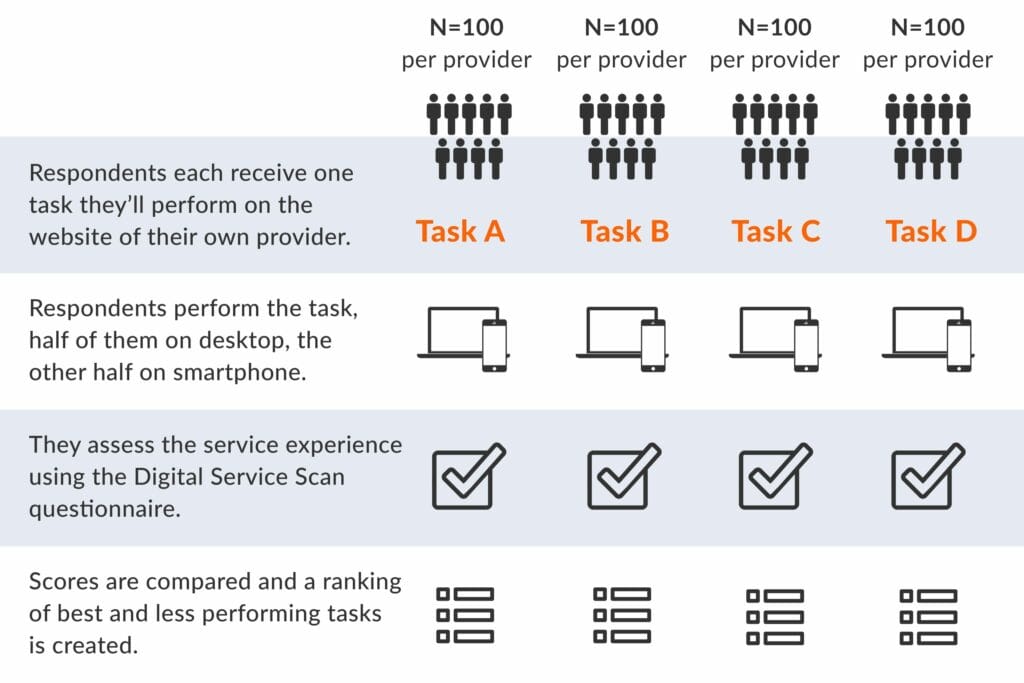
At WUA, we also apply our Digital Service Benchmark and our model to the public sector. Using our Digital Service Benchmark and our internally developed online questionnaires, we ask respondents to perform one or more service tasks on a website. We then ask them key questions about their customer journey and service experience. We focus on three different aspects of the service experience (read more about our method here):
-
Functional: Technological operation of the website and the accessibility of information
-
Rational: The logic of a website (navigation, information and facilitation)
-
Emotional: The appreciation for the provider and the feeling that customers have while solving a service question.
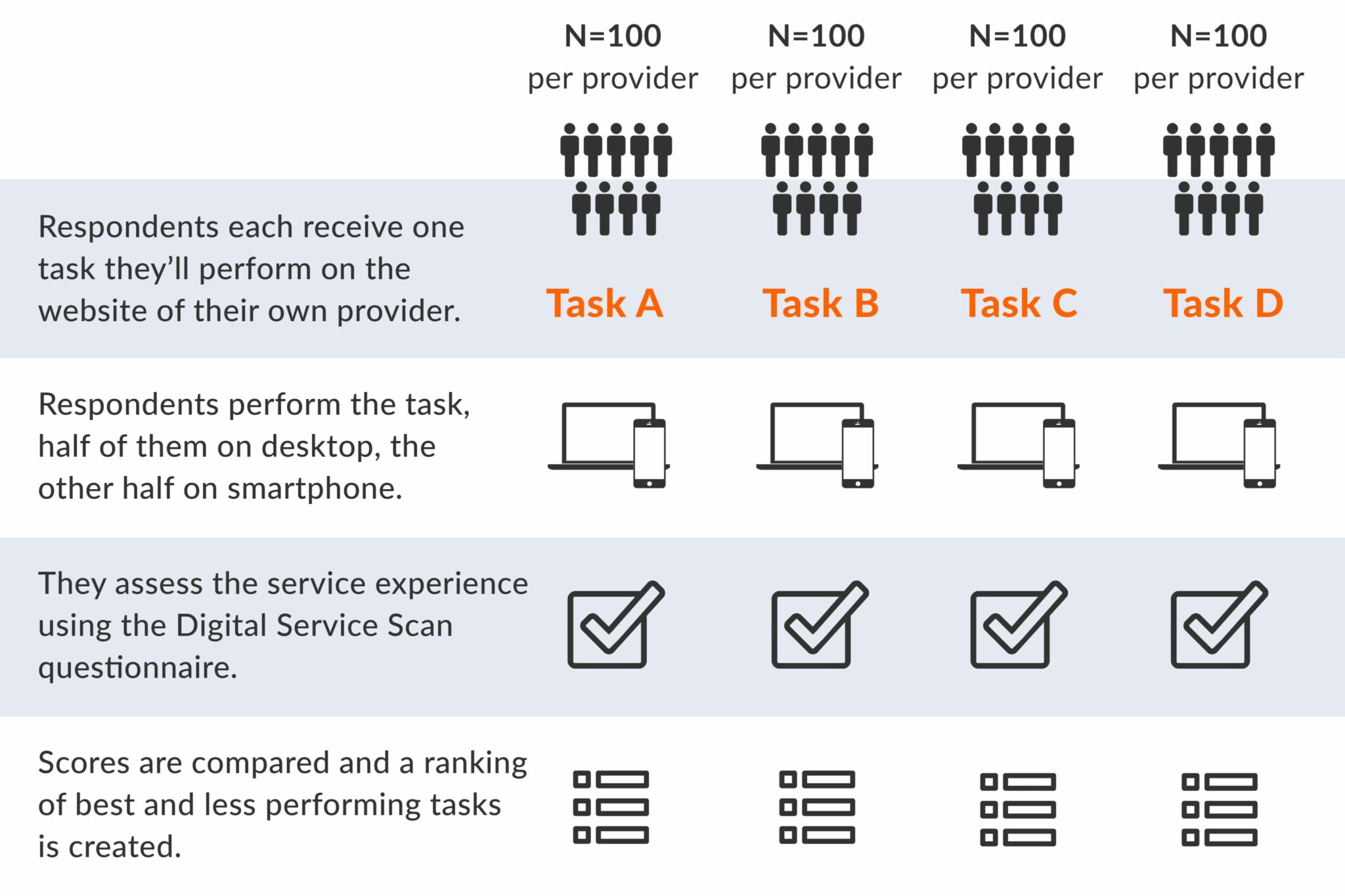
The results provide public institutions and digital service providers with powerful insights on how they can improve all kinds of service tasks. It also delivers clear service KPIs such as CES, NPS and channel preference.
An idea of how this works: Applying for a parking permit
To give you an idea of how this works, in a recent study we focused on one important task: applying for a parking permit online. We asked hundreds of participants in the four largest cities in the Netherlands to rank their customer journey and experience. Like all our benchmarking activities, the results of this study will generate recommendations for improving customer service. It will help cities learn from each other. The same approach applies to many different types of online service tasks. These benchmarks help public institutions make smarter web design choices based on real NPS and CES feedback from users. The possibilities for benchmarking government services are very extensive. Virtually any online task can be studied and benchmarked with our method. Some examples are:
-
Booking service appointments
-
Requesting changes to personal data
-
Applying for documents (such as passports, ID cards, permits etc.)
-
Filing complaints
How does benchmarking help the public sector improve?
Today's public sector faces tight budgets, increasingly skeptical citizens and overcrowded service points. Benchmarking and improving online service delivery not only lowers costs, but also helps build a stronger bond between citizens and their public servants. This trust is essential for government organizations to function properly.
Frequently asked questions
What three aspects does WUA's Digital Service Benchmark measure?
It focuses on the functional aspect (technological operation and accessibility of information), the rational aspect (the logic of a website, including navigation, information and facilitation) and the emotional aspect (appreciation for the provider and the feeling customers have while solving a service question).
What kinds of online tasks can be benchmarked for public institutions?
Virtually any online task can be studied and benchmarked, including booking service appointments, requesting changes to personal data, applying for documents such as passports, ID cards or permits, and filing complaints.
What KPIs does this type of benchmarking deliver?
The results deliver clear service KPIs such as CES, NPS and channel preference.